Postoperative nausea and vomiting (PONV) remains one of the most debilitating and frequently encountered complications following general anesthesia. For physiotherapists and rehabilitation specialists dedicated to optimizing postoperative recovery, managing these symptoms is crucial. Moderate to severe PONV significantly impedes early mobilization, delays functional recovery, and negatively impacts overall patient satisfaction. While pharmacotherapy like metoclopramide has long been the standard of care, it often yields inadequate relief. A groundbreaking randomized clinical trial published in JAMA Surgery (March 2026) explores a promising nonpharmacological alternative: transcutaneous electrical acupoint stimulation (TEAS).
The Promise of Neuromodulation at the PC6 Acupoint
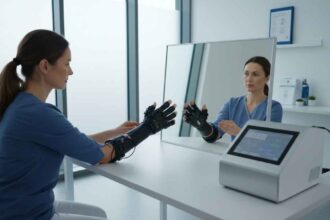
The study sought to evaluate the clinical efficacy of a novel wearable TEAS device targeting the PC6 (Neiguan) acupoint compared to traditional intravenous medication. Conducted across four major hospitals, this randomized, double-dummy, patient- and observer-blinded trial focused on female patients aged 25 to 55 years who developed moderate to severe PONV following thyroidectomy or anterior cervical surgery. Participants were randomized into two distinct groups. The active intervention group received TEAS via an EmeTerm wristband applied for two hours alongside a saline placebo injection. The control group received an inactive sham TEAS device coupled with 10 mg of intravenous metoclopramide. The primary outcome measured was the two-hour PONV remission rate, defined as significant symptom relief.
Unprecedented Clinical Outcomes for Wearable TEAS
The results of this robust trial forcefully highlight the superiority of electrostimulation. Among the 232 patients randomized and analyzed, the TEAS group demonstrated a significantly higher two-hour remission rate of 77.6% compared to just 55.2% in the metoclopramide control group. Even more compelling for long-term postoperative care was the dramatic reduction in relapse rates. Only 12.2% of patients in the TEAS group experienced a 24-hour relapse, in stark contrast to the 56.3% relapse rate observed in the medication group. Notably, there were zero adverse events reported in either cohort, underscoring the exceptional safety profile of wearable TEAS devices.
Relevance to Orthopaedic and Postoperative Physiotherapy
For practitioners visiting www.orthopaedicmanipulation.com, these findings carry significant weight. While the trial focused on cervical and thyroid surgeries, the underlying mechanisms of TEAS and PONV apply universally to broader postoperative populations, including those recovering from major orthopaedic procedures. Early mobilization is a cornerstone of orthopaedic rehabilitation. By effectively mitigating severe nausea and vomiting through safe, non-invasive electrical acupoint stimulation, physiotherapists can help facilitate quicker transitions from bed rest to active therapy. Incorporating wearable neuromodulation devices into the postoperative care pathway represents a forward-thinking approach that prioritizes patient comfort and accelerates the rehabilitation timeline.
References
Zheng, D. Y., Ding, P., Gong, M., Zhu, H. W., Shi, H. J., Ren, G. L., Jin, L. Y., Wang, Y. Q., Yuan, H. B., & Li, Y. H. (2026). Transcutaneous Electrical Acupoint Stimulation vs Metoclopramide for Moderate to Severe Postoperative Nausea and Vomiting: A Randomized Clinical Trial. JAMA surgery. https://pubmed.ncbi.nlm.nih.gov/41604189/