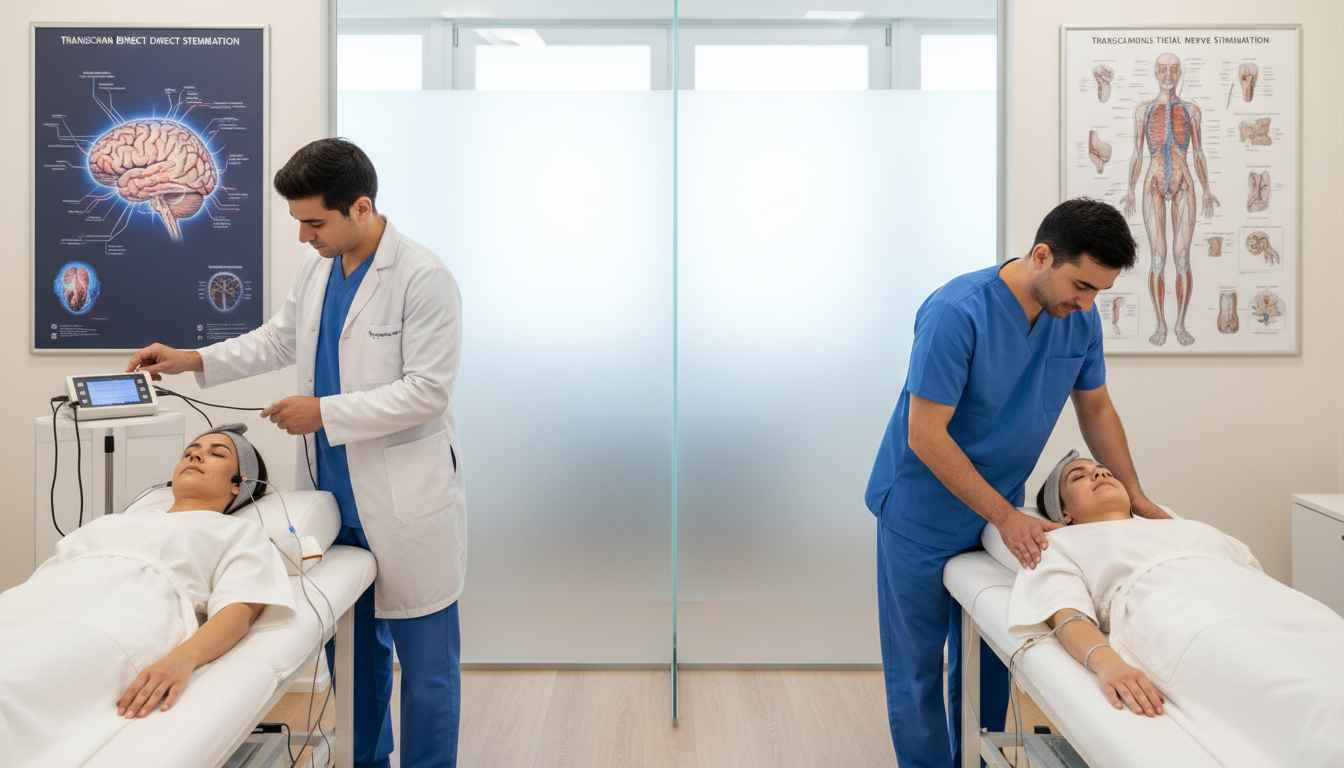
Overactive Bladder (OAB) syndrome remains a prevalent and distressing condition affecting a significant portion of the female population. While first-line interventions in pelvic health physiotherapy typically involve behavioral modifications and Pelvic Floor Muscle Training (PFMT), the role of neuromodulation has grown increasingly prominent. While Transcutaneous Tibial Nerve Stimulation (TTNS) is a well-established peripheral intervention, emerging research suggests that targeting the central nervous system directly—specifically the medial prefrontal cortex (mPFC)—may offer superior outcomes. A recent Randomized Controlled Trial (RCT) published in Clinical Neurophysiology compares these two modalities.
The Neural Control of Micturition
To understand the rationale behind this study, clinicians must look to the neural circuits governing bladder control. The medial prefrontal cortex plays a pivotal role in the inhibitory control of the micturition reflex. Dysregulation in this area is often cited in the pathophysiology of OAB. Consequently, Transcranial Direct Current Stimulation (tDCS), a non-invasive brain stimulation technique, has been proposed to enhance cortical excitability and restore inhibitory control, potentially offering a more direct mechanism of action than peripheral nerve stimulation.
Study Methodology: Central vs. Peripheral Stimulation
Conducted at Firoozgar Hospital, this single-blind, parallel RCT involved 44 women diagnosed with OAB. The participants were randomized into two distinct groups:
- Group A (tDCS): Received tDCS targeting the mPFC combined with PFMT.
- Group B (TTNS): Received TTNS combined with PFMT.
By including PFMT in both arms, the study effectively isolated the added value of the specific neuromodulation modality. The primary outcome measure was Quality of Life (QoL), assessed via the ICIQ-LUTSqol. Secondary measures included the ICIQ-OAB for symptom severity, a three-day bladder diary, and perineometric assessment of pelvic floor muscle strength.
Key Findings: Superiority of Cortical Stimulation
The results indicated that while both intervention arms achieved improvements—likely due to the foundational benefit of PFMT—the tDCS group demonstrated statistically significant superiority in key metrics. Specifically, the group receiving cortical stimulation showed greater reductions in ICIQ-OAB scores and reported lower symptom bother compared to the TTNS group.
Furthermore, regarding quality of life, the tDCS group exhibited comparatively greater improvements both immediately post-treatment and at the one-month follow-up (p < 0.05). Perhaps most clinically relevant was the reduction in urinary incontinence episodes; the tDCS group experienced a more marked decline in episodes, a benefit that was sustained throughout the follow-up period.
Clinical Implications for Pelvic Health Physiotherapy
This study adds weight to the growing body of evidence supporting the brain-bladder axis as a therapeutic target. While TTNS remains a valuable tool in the physiotherapist’s arsenal, these findings suggest that for patients with refractory OAB, or where peripheral stimulation yields suboptimal results, central neuromodulation via tDCS may provide enhanced symptom relief and quality of life improvements. However, as the authors note, further sham-controlled studies are necessary to definitively confirm these benefits before broad clinical adoption.
References
Gorji, Z., Rasanani, M. R. H., Nitsche, M., Ahadi, T., Khanmohammadi, R., & Torkzadeh, A. (2026). Comparison of the effectiveness of transcranial direct current stimulation and transcutaneous tibial nerve stimulation on the urgency and frequency of women with overactive bladder syndrome: A randomized controlled trial. Neurophysiologie Clinique = Clinical Neurophysiology. https://pubmed.ncbi.nlm.nih.gov/41547311/