Rethinking Postoperative Care for Knee Arthroplasty
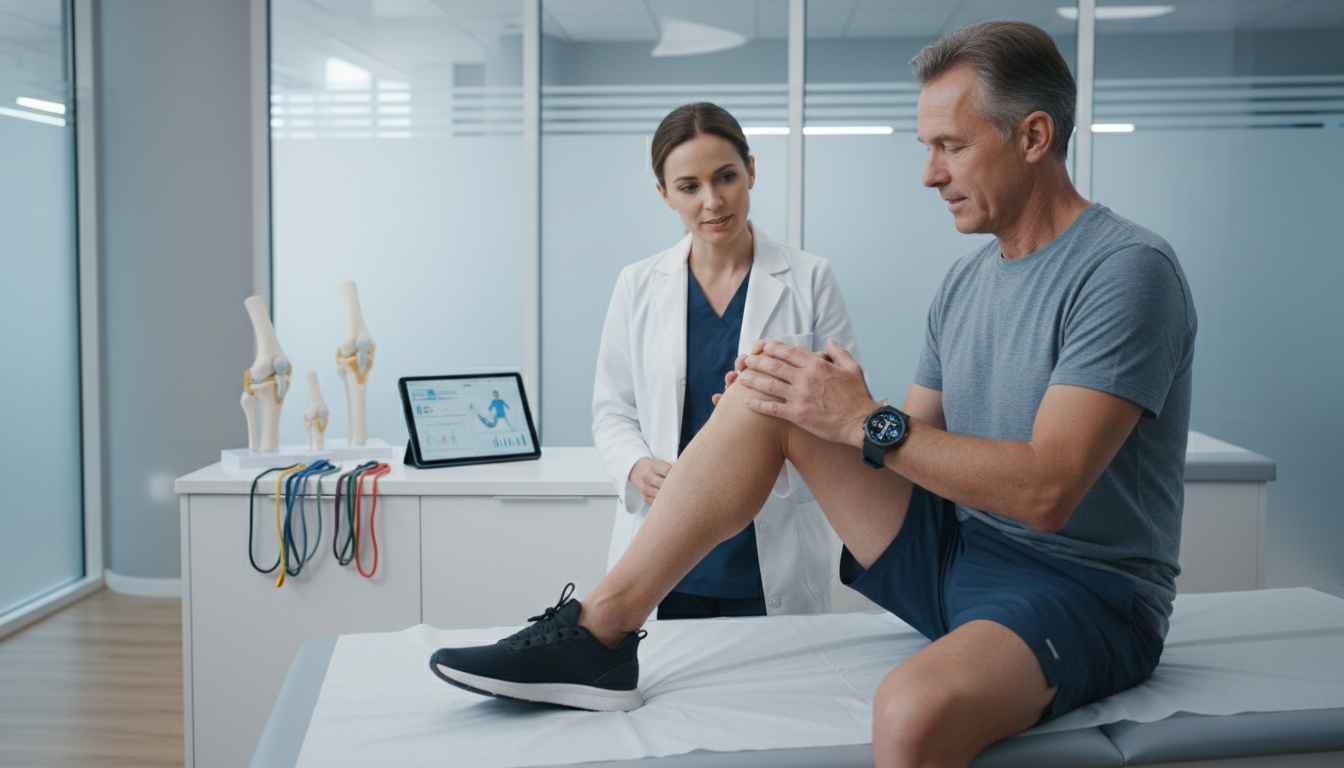
For decades, formal, supervised physical therapy has been the gold standard for post-surgical recovery following a total knee arthroplasty (TKA). The prevailing belief among orthopaedic and physiotherapy professionals has been that self-directed rehabilitation (SDR) lacks the oversight necessary to achieve optimal range of motion (ROM) and functional recovery. However, the rapid advancement of wearable technology and mobile health applications is challenging this traditional paradigm. Can a smartwatch paired with a dedicated mobile application effectively guide a patient through their TKA recovery without compromising clinical outcomes?
Evaluating Wearable Tech in Total Knee Arthroplasty
To address this clinical question, a prospective, randomized, multicenter, controlled trial investigated the efficacy of a technology-assisted SDR program compared to standard formal physical therapy. The study enrolled 337 patients who underwent primary TKA. Participants were divided into a control group (184 patients receiving traditional, formal physical therapy) and a study group using a smartwatch paired with a mobile app. The study group was further stratified into high exercise compliance (90 patients) and low exercise compliance (63 patients) subgroups.
Researchers utilized highly validated patient-reported outcome measures (PROMs) to track recovery. These included the Knee Injury and Osteoarthritis Outcome Score for Joint Replacement (KOOS, JR) and the EuroQol five-dimension five-level (EQ-5D-5L) questionnaire. In addition to PROMs, the clinical team meticulously recorded clinical data, specifically focusing on postoperative range of motion and the incidence of manipulation under anesthesia (MUA).
Clinical Outcomes: Does Tech Match Traditional Therapy?
The results of this level I study provide compelling insights for physiotherapy practice. Statistically, the low-compliance SDR group showed lower net improvements in KOOS, JR scores from baseline at the 3-month and 6-month marks compared to the control group. A similar minor statistical difference was noted at 6 months for the high-compliance group. However, the crucial takeaway for clinicians is that these statistical differences did not meet the threshold of 8.02 units required for a minimal clinically important difference (MCID). In practical terms, the patients functioned equally well.
Furthermore, there were no significant differences observed between the groups concerning range of motion recovery, manipulation under anesthesia rates, or other PROMs at various time intervals. The data robustly suggests that utilizing a smartwatch and mobile app for self-directed rehabilitation yields clinical and functional outcomes comparable to traditional in-clinic physiotherapy.
Integrating Digital Health into Orthopaedic Rehabilitation
As orthopaedic rehabilitation evolves, physiotherapists must adapt to the integration of digital health tools. This research does not render the physical therapist obsolete; rather, it highlights an opportunity to optimize resource allocation. By leveraging smartwatches and mobile applications, clinicians can confidently offer self-directed rehabilitation as an evidence-based alternative for motivated patients, particularly those facing geographical or logistical barriers to regular clinic visits. By monitoring compliance digitally, physical therapists can transition from traditional supervisors to proactive rehabilitation consultants, stepping in only when data indicates a patient is falling behind. This empowers patients while maintaining the high standards of postoperative care expected following TKA.
References
Tripuraneni, K. R., Foran, J. R. H., Munson, N. R., Racca, N. E., & Carothers, J. T. (2021). A Smartwatch Paired With A Mobile Application Provides Postoperative Self-Directed Rehabilitation Without Compromising Total Knee Arthroplasty Outcomes: A Randomized Controlled Trial. The Journal of Arthroplasty, 36(12). https://pubmed.ncbi.nlm.nih.gov/34462184/