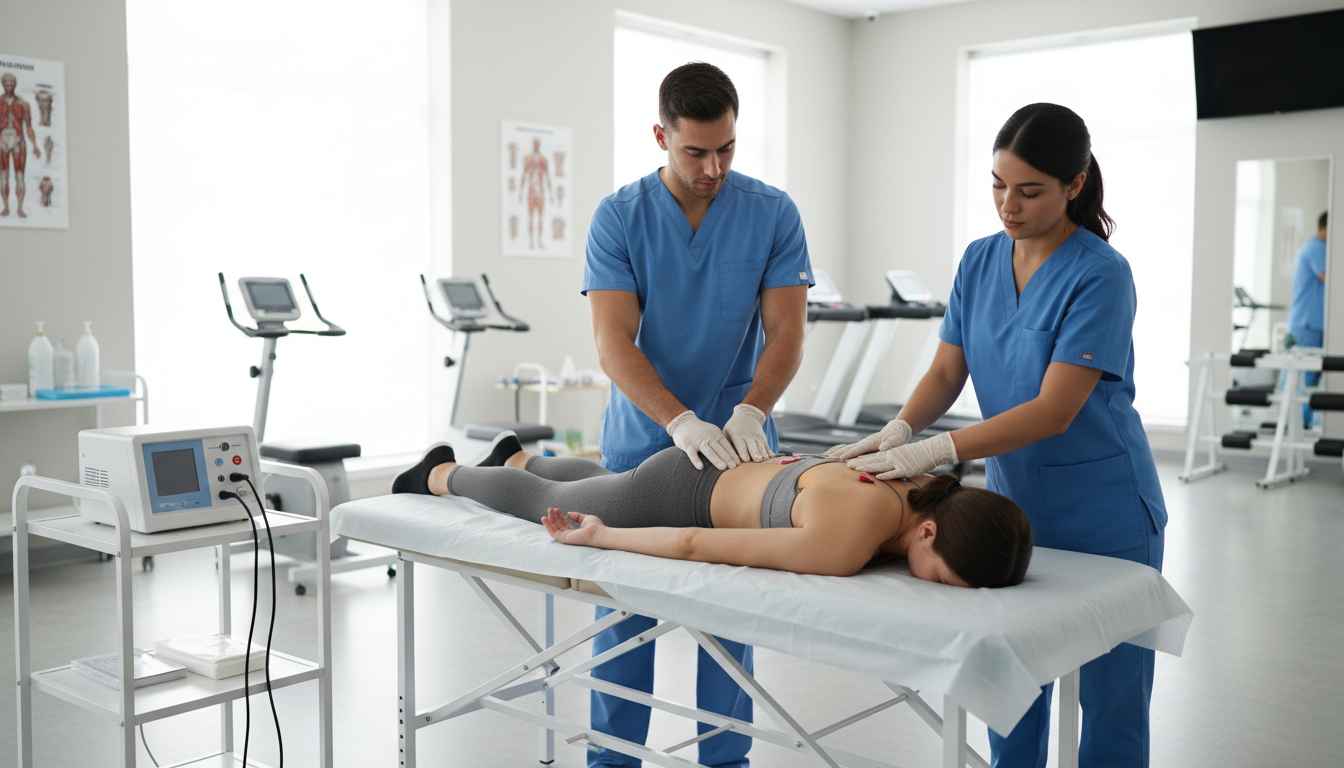
Adolescent Idiopathic Scoliosis (AIS) presents a complex rehabilitation challenge, primarily characterized by three-dimensional spinal deformity and significant neuromuscular imbalance. For physiotherapists, the goal is often to arrest progression and improve symmetry. While soft tissue mobilization is a staple in conservative management, recent evidence suggests that specific manual therapy techniques may offer superior modulation of neuromuscular activity. A randomized controlled trial published in the China Journal of Orthopaedics and Traumatology (2026) investigates the efficacy of segmental spinal manipulation compared to ordinary massage, utilizing surface electromyography (EMG) to measure physiological changes.
Addressing Paraspinal Asymmetry
The pathophysiology of AIS involves a distinct asymmetry in paraspinal muscle function. Typically, muscles on the convex side of the curve are elongated and often weak, while muscles on the concave side are shortened and hypertonic. Effective treatment must ideally facilitate the weak convex musculature while inhibiting the overactive concave musculature.
This study, conducted between 2022 and 2023, recruited 90 adolescents aged 10 to 18 diagnosed with AIS. Participants were randomized into two groups: an observation group receiving segmental spinal manipulation and a control group receiving standard massage therapy. Both cohorts underwent treatment once a week for 12 weeks.
EMG Analysis: Turns and Amplitude
Researchers utilized needle electromyography to assess "Turns" (indicating motor unit recruitment and firing frequency) and Mean Amplitude (MA) across various functional positions, including standing, flexion, extension, and rotation.
The results highlighted a statistically significant advantage for the manipulation group regarding the neuromuscular firing patterns. Post-treatment data revealed that segmental spinal manipulation successfully increased the "Turns" on the convex side (thoracic and lumbar) in multiple positions compared to the control group. Simultaneously, it significantly decreased the "Turns" on the overactive concave side. This suggests that segmental manipulation does not merely mobilize joints but actively helps re-regulate the neural drive to the paraspinal muscles, promoting a more balanced recruitment pattern.
While both groups saw improvements in Mean Amplitude (MA)—a proxy for muscle strength—the manipulation group demonstrated specific advantages in the concave paraspinal muscles during standing and forward flexion.
Cobb Angle and Clinical Application
Beyond electromyographic changes, the structural outcomes were notable. On the day after treatment concluded, the observation group exhibited a significantly lower Cobb angle compared to the massage group. The authors concluded that while manipulation improves muscle fiber type adjustment and recruitment symmetry (Turns), its ability to reduce the Cobb angle is likely attributed to the three-dimensional mechanical adjustment of the spine.
For manual physical therapists, this study underscores the importance of specificity. While massage provides general soft tissue benefits, segmental spinal manipulation appears to offer a dual benefit: mechanical correction of the curvature and neurological recalibration of the paraspinal agonist-antagonist relationship. Integrating targeted manipulation may be superior to soft tissue work alone for correcting the neuromuscular asymmetries inherent in AIS.
References
Tian, J., Wu, J., Xie, H., Ying, X., Ye, X., & Yao, R. (2026). Effects of segmental spinal manipulation on adolescent scoliosis based on electromyography parameters. Zhongguo Gu Shang = China Journal of Orthopaedics and Traumatology, 39(1). https://pubmed.ncbi.nlm.nih.gov/41663256/