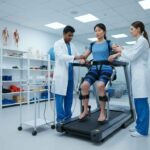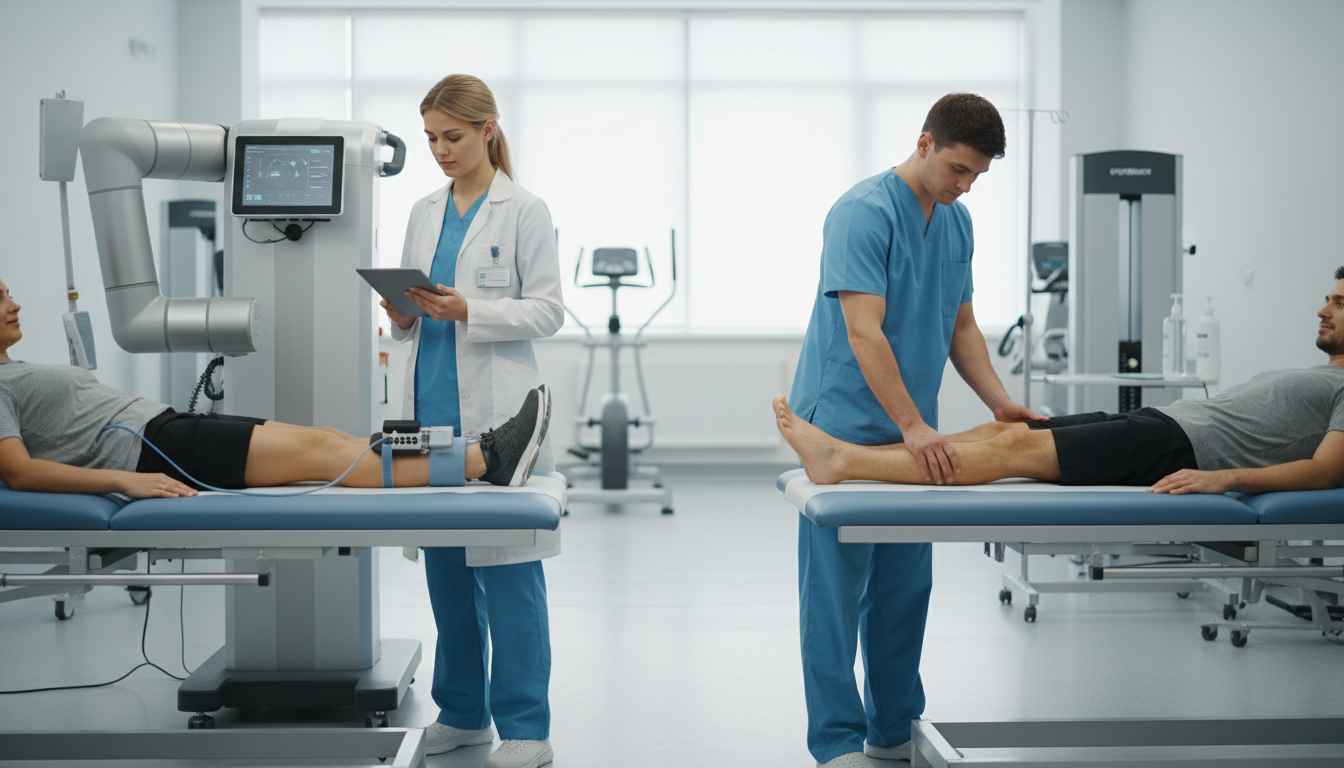
Stroke remains a predominant cause of long-term disability globally, placing a significant demand on physiotherapists to optimize early intervention strategies. The window for early motor recovery is critical, yet the physical demands of manual therapy on clinicians and the varying tolerance levels of patients often limit the intensity of rehabilitation. A groundbreaking Randomized Controlled Trial (RCT) published in the Journal of Visualized Experiments (Nov 2025) investigates a technological solution to this challenge: the application of bedside lower extremity rehabilitation robots.
Study Overview and Methodology
The study, conducted by Yao et al., sought to evaluate both the clinical efficacy and patient comfort of robot-assisted therapy compared to conventional manual therapy. The research team recruited forty inpatients diagnosed with first-onset stroke presenting with post-stroke hemiplegia. A key inclusion criterion was significant motor impairment, defined as lower limb muscle strength of Grade ≤ 2.
Using SAS 9.4 for randomization, participants were allocated (1:1) into two distinct groups:
- Robot-Assisted Therapy Group: Patients received a two-stage intervention involving specific robot training protocols.
- Conventional Manual Therapy Group: Patients received standard manual physiotherapeutic interventions.
The researchers utilized a robust set of outcome measures to gauge success, including the Fugl-Meyer Assessment for Lower Extremities (FMA-LE), the Modified Ashworth Scale (MAS) for spasticity, the Modified Barthel Index (MBI) for activities of daily living, and the General Comfort Questionnaire (GCQ) to assess the patient experience.
Outcomes: Comfort, Safety, and Functional Gains
The results of this RCT offer compelling evidence for the integration of robotics in acute and sub-acute neurological care. In the early stages of recovery, both the robotic and manual therapy groups achieved similar motor gains. This non-inferiority is a crucial finding, suggesting that automated systems can match the efficacy of skilled manual handling for early motor facilitation.
However, the divergence in secondary outcomes highlights the distinct advantages of the robotic approach. The robot-assisted group reported significantly superior scores on the General Comfort Questionnaire (GCQ). For patients suffering from severe hemiplegia, the consistency and ergonomic support provided by the robot likely contributed to a less distressing rehabilitation experience.
Furthermore, while early motor gains were comparable, the study protocol noted that the robot-assisted group demonstrated greater functional improvements in the later stages of the intervention. This suggests that the consistent, high-repetition movement provided by bedside robots may lay a stronger foundation for long-term functional recovery compared to manual therapy alone.
Clinical Implications for Physiotherapists
For the practicing physiotherapist, these findings validate the feasibility and safety of integrating bedside rehabilitation robots into early stroke care. The study demonstrates that such technology does not replace clinical reasoning but rather augments the rehabilitation process. By ensuring patient comfort and delivering consistent therapeutic motion, robotic systems allow clinicians to focus on functional retraining and higher-level motor control strategies once muscle strength improves.
References
Yao, B., Liu, Y., Yao, Z., Chen, J., Qi, B., & Chen, Z. (2025). Application of Bedside Lower Extremity Rehabilitation Robots in Stroke Rehabilitation: A Randomized Controlled Trial. Journal of Visualized Experiments. https://pubmed.ncbi.nlm.nih.gov/41396879/