Navigating Graft Selection in ACL Reconstruction
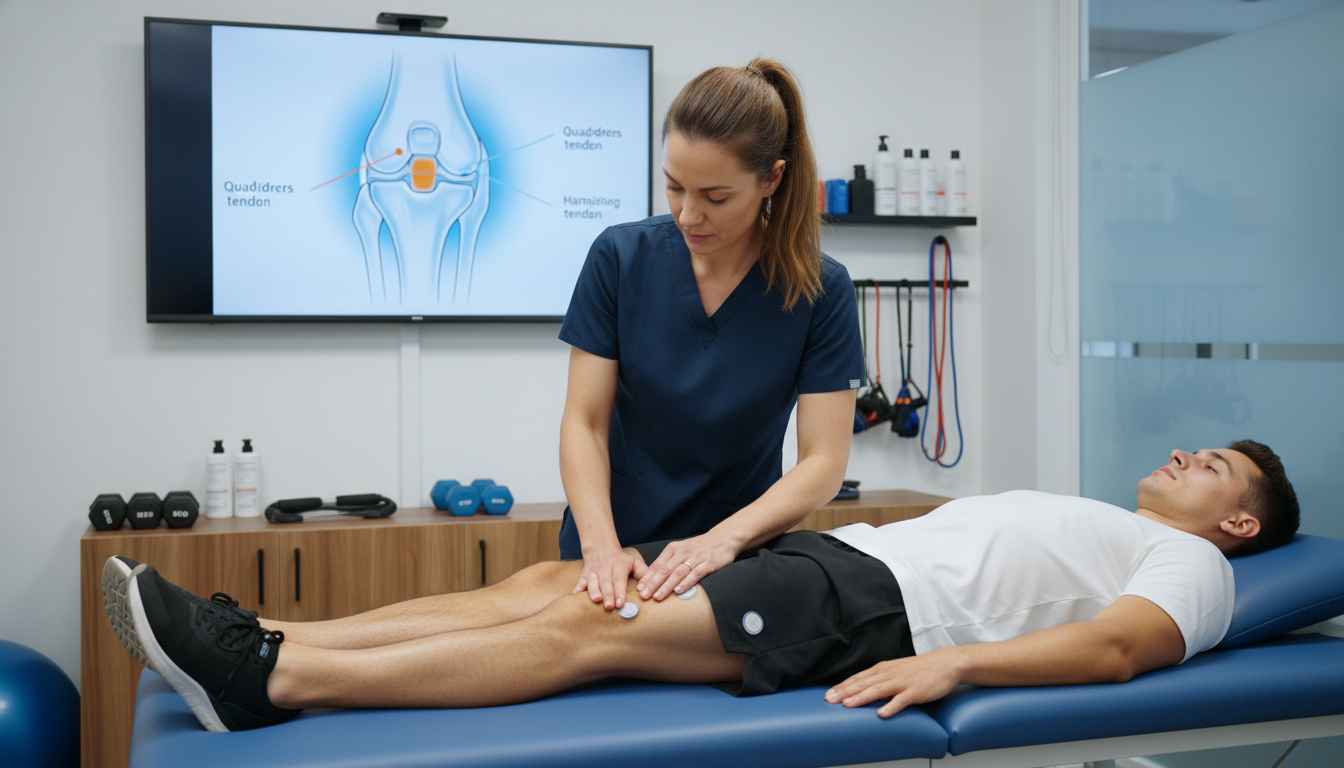
For orthopaedic and sports physiotherapists, guiding a patient through anterior cruciate ligament reconstruction (ACLR) rehabilitation requires a deep understanding of the surgical approach. A critical decision made by surgeons is the choice of autograft, with the hamstring tendon (HT) and quadriceps tendon (QT) being two highly viable options. Despite the popularity of both, high-level evidence directly comparing their functional and psychological outcomes has been limited. A recent 2024 Level 1 randomized controlled trial sheds light on how these two graft types stack up over a two-year follow-up, offering vital insights for tailored rehabilitation.
Study Overview: Comparing QT and HT Outcomes
The study followed 112 patients randomized into either an HT group (n=55) or a QT group (n=57). Researchers conducted comprehensive assessments pre-operatively and at multiple post-operative intervals up to 24 months. Outcomes measured included patient-reported outcome measures (PROMs), knee laxity via arthrometer, range of motion (ROM), isokinetic strength for both flexors and extensors, and a 6-hop performance battery. To evaluate functional restoration, limb symmetry indices (LSIs) were calculated for strength and hop performance. Both groups experienced similar rates of secondary procedures and graft retears, proving both constructs to be structurally reliable over the review period.
Clinical Findings: Strength, Function, and Psychological Readiness
Overall, both groups showed significant improvements in PROMs and ROM, with no major differences in side-to-side graft laxity across the 24 months. However, the study revealed fascinating differences in muscle strength and psychological readiness. Patients in the QT group demonstrated significantly greater hamstring strength LSI at 6, 12, and 24 months. Conversely, the HT group exhibited superior quadriceps strength LSI at the 6- and 12-month marks, alongside better LSI in several single hop tests for distance early in the recovery phase. Interestingly, psychological readiness to return to sport, measured by the ACL-RSI, was significantly higher in the HT cohort at 3, 6, and 12 months, suggesting a potential psychological hurdle or altered confidence trajectory for QT patients early in their rehabilitation.
Implications for Post-Operative Physiotherapy
These findings underscore the necessity of graft-specific rehabilitation protocols. For patients with a QT autograft, physiotherapists must prioritize early and aggressive quadriceps activation and strengthening, as this group is prone to lasting extensor deficits. Furthermore, extra attention to psychological readiness and confidence-building is paramount for the QT population, given their lower ACL-RSI scores. On the other hand, clinicians treating HT autograft patients need to implement robust hamstring loading protocols to mitigate the persistent flexor strength deficits observed up to 24 months post-operatively. By understanding these inherent graft-specific biomechanical and psychological trajectories, physiotherapists can better optimize return-to-sport timelines and outcomes.
References
Ebert, J. R., Calvert, N. D., & Radic, R. (2024). A Prospective Randomized Controlled Trial Investigating Quadriceps Versus Hamstring Tendon Autograft in Anterior Cruciate Ligament Reconstruction. The American Journal of Sports Medicine.