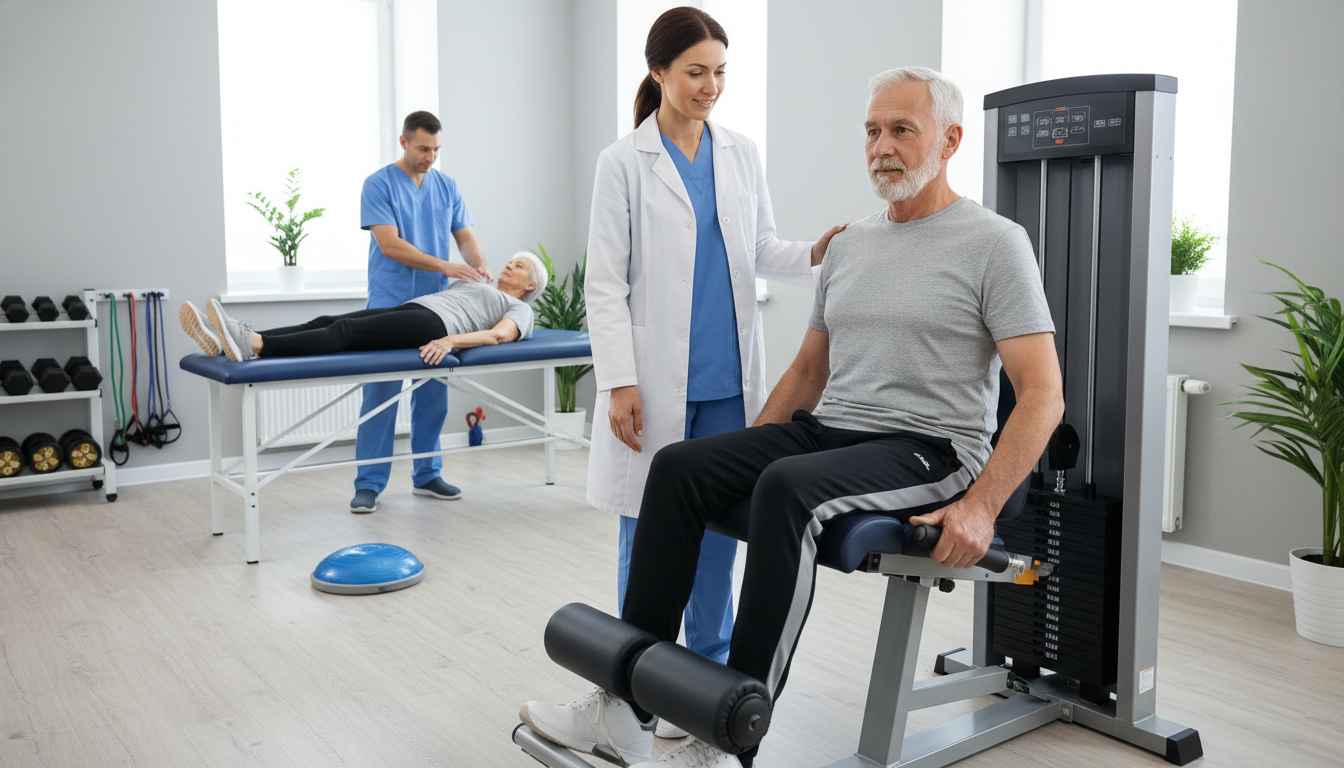
Unleashing the Power of Resistance Training on Cognitive Health
As life expectancy increases, physiotherapists are increasingly tasked with managing older adults presenting with both physical and cognitive decline. Subcortical vascular cognitive impairment (SVCI), often driven by cerebral small vessel disease, represents a significant portion of mild cognitive impairment cases. Historically, aerobic exercise has been the cornerstone of exercise-based cognitive research. However, an emerging body of evidence suggests that progressive resistance training (PRT) may offer profound neuroprotective benefits. For rehabilitation professionals, understanding the intersection of muscle strengthening and cognitive preservation is vital for designing comprehensive, evidence-based care plans.
The 12-Month Trial: Progressive Resistance Training vs. Balance and Tone
To investigate the longitudinal impact of strength training on SVCI, Liu-Ambrose and colleagues conducted a robust 12-month randomized controlled trial. The study enrolled 91 adult participants who were randomly assigned to either a progressive resistance training group (45 participants) or a balance and tone exercise control group (46 participants). The primary metric for assessing cognitive change was the Alzheimer’s Disease Assessment Scale Cognitive Plus (ADAS-Cog-Plus). By comparing targeted muscle hypertrophy and strength protocols against lower-intensity balance exercises, the researchers aimed to isolate the specific cognitive and systemic effects of progressive mechanical loading.
Clinical Outcomes: Cognitive Improvements and Systemic Changes
The results of the trial yielded compelling evidence in favor of PRT. Over the 12-month period, 76 participants successfully completed the study, with both groups demonstrating comparable adherence rates. Participants in the progressive resistance training group exhibited statistically significant improvements in their ADAS-Cog-Plus scores compared to the balance and tone group. Interestingly, planned contrasts stratified by sex revealed that the cognitive benefits were particularly pronounced in female participants, suggesting a potential sex-specific physiological response to resistance training.
Beyond direct cognitive measures, the trial uncovered significant systemic changes. The PRT group demonstrated a marked reduction in C-reactive protein (CRP), a well-established biomarker for systemic inflammation. Given that chronic inflammation is a known risk factor for both vascular disease and neurodegeneration, this anti-inflammatory effect provides a plausible biological mechanism for the observed cognitive enhancements. While no significant differences were observed across other secondary outcomes, the dual benefit of cognitive improvement and reduced inflammation is clinically highly relevant.
Practical Implications for Physiotherapy Practice
For physiotherapists, this trial reinforces the necessity of incorporating progressive resistance training into rehabilitation programs for older adults, particularly those with or at risk for SVCI. The findings demonstrate that PRT is not solely about reversing sarcopenia or improving fall risk; it is an active intervention for brain health. Clinicians should confidently prescribe periodized strength training, ensuring adequate intensity and progressive overload to trigger both musculoskeletal and systemic physiological adaptations. Recognizing the anti-inflammatory and neuroprotective potential of lifting weights allows physical therapists to advocate for comprehensive exercise prescriptions that address the holistic well-being of the aging patient.
References
Liu-Ambrose, T., Falck, R. S., Dao, E., Crockett, R. A., Barha, C. K., Silva, N. C. B. S., Alkeridy, W. A., Best, J. R., Hsiung, G. R., Field, T. S., Madden, K. M., Davis, J. C., Ten Brinke, L. F., & Tam, R. C. (2026). Resistance training and subcortical vascular cognitive impairment: A 12-month randomized trial. Alzheimer’s & dementia : the journal of the Alzheimer’s Association.