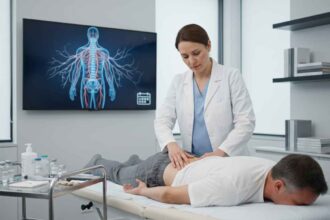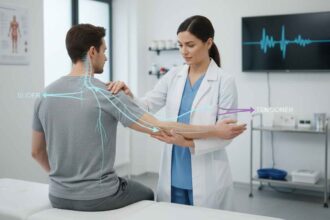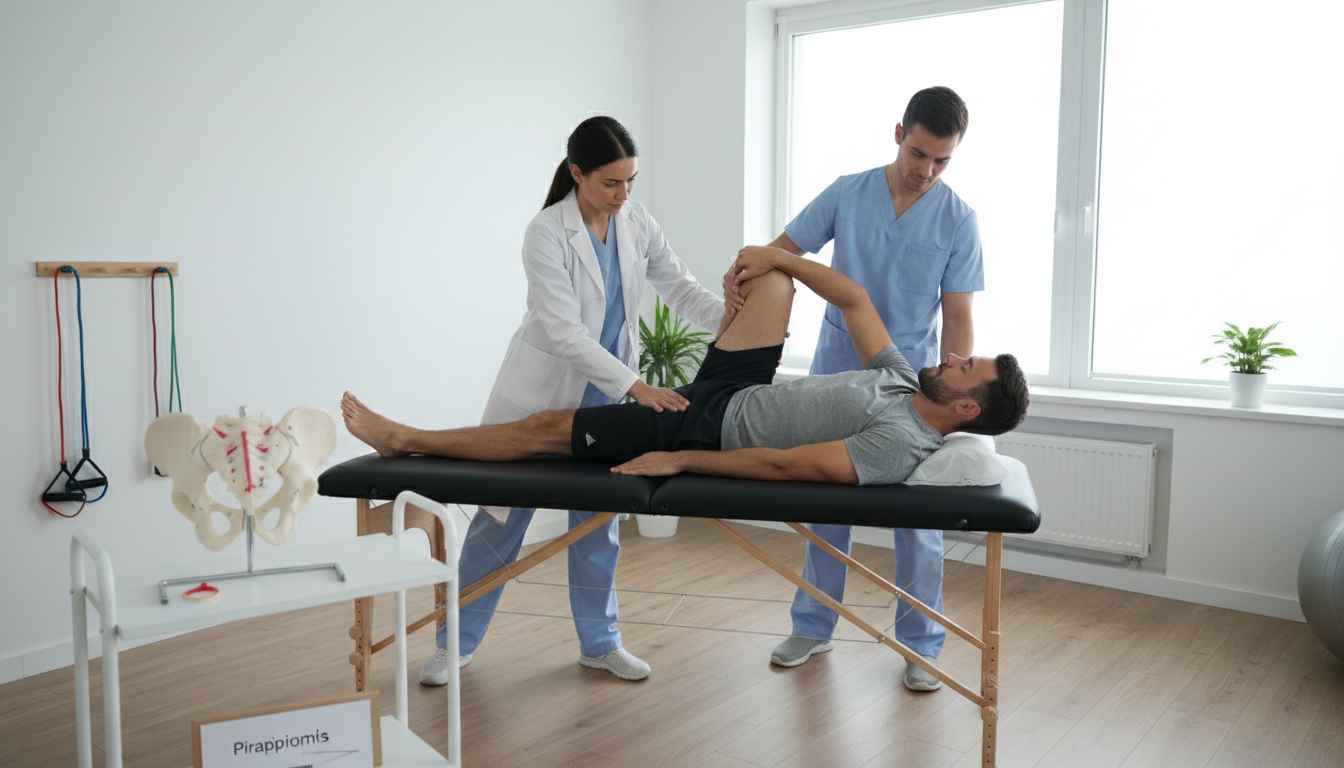
Sacroiliac joint (SIJ) dysfunction remains a prevalent and often recalcitrant condition in orthopaedic rehabilitation. As clinicians, we frequently observe the complex interplay between lumbopelvic biomechanics and soft tissue restrictions. A common clinical observation is the relationship between hypertonicity in the piriformis muscle and reduced mobility or pain at the SIJ. However, evidence-based practice requires us to quantify whether addressing this muscular component yields statistically significant benefits over joint mobilization alone. A recent randomized controlled trial (RCT) published in the Journal of Bodywork and Movement Therapies (October 2025) offers compelling data regarding this specific multimodal approach.
The Anatomical Link Between the Piriformis and the Sacroiliac Joint
The piriformis muscle originates from the anterior surface of the sacrum and inserts into the greater trochanter of the femur. Due to this anatomical orientation, the muscle acts as a primary stabilizer of the SIJ. When the piriformis becomes tight or goes into spasm—often a protective mechanism in response to SIJ instability or dysfunction—it can restrict the natural nutation and counter-nutation movements of the sacrum. Consequently, treating the joint mechanics without addressing the muscular tethering may limit functional recovery. The study by Sadiq et al. (2025) sought to investigate whether adding a specific piriformis stretch to a standard mobilization protocol would enhance clinical outcomes.
Study Design: Mobilization Versus Combined Therapy
The researchers conducted a non-blind randomized controlled trial involving 36 participants diagnosed with SIJ dysfunction. The cohort was evenly divided into two groups (n=18 each). Both groups received a foundational treatment protocol consisting of thermo-electrotherapy followed by specific SIJ mobilizations. The control group received these interventions alone, while the experimental group received an additional piriformis stretching protocol. Treatment was administered over three sessions on alternate days for a duration of one week.
Outcomes were measured using the Numeric Pain Rating Scale (NPRS) for pain intensity and the Oswestry Disability Index (ODI) to assess functional disability. This short-term follow-up provides insight into the immediate efficacy of manual therapy interventions in the acute or sub-acute management phase.
Key Findings: Functional Disability Outweighs Pain Metrics
The results of the trial revealed an interesting dichotomy between pain perception and functional capacity. Within-group analysis showed that both the control (mobilization only) and experimental (mobilization + stretch) groups experienced statistically significant improvements in pain and disability from baseline. This reinforces the efficacy of SIJ mobilization as a core treatment modality.
However, the between-group analysis provided a crucial nuance for clinical decision-making. While there was no statistically significant difference in pain reduction between the two groups, the group receiving the piriformis stretch demonstrated significantly superior improvements in disability scores (ODI). This suggests that while joint mobilization is sufficient for nociceptive modulation, the restoration of functional movement patterns—bending, lifting, and walking—is significantly enhanced when piriformis flexibility is restored.
Clinical Implications for Orthopaedic Rehabilitation
For the practicing physiotherapist, these findings underscore the importance of a multimodal approach. While pain relief is often the patient’s primary goal, the restoration of function is the clinician’s ultimate objective. The data suggests that a tight piriformis may not necessarily be the primary pain generator in all cases of SIJ dysfunction, but it is a significant barrier to functional movement. By incorporating piriformis stretching, therapists can potentially accelerate the return to daily activities, even if the trajectory of pain reduction remains similar to mobilization alone.
References
Sadiq, A., Khalid, Z., Kiran, T., & Hassan, W. (2025). Additional effects of piriformis stretch in the management of sacroiliac joint dysfunction: A randomized control trial. Journal of Bodywork and Movement Therapies. https://pubmed.ncbi.nlm.nih.gov/40954575/