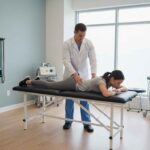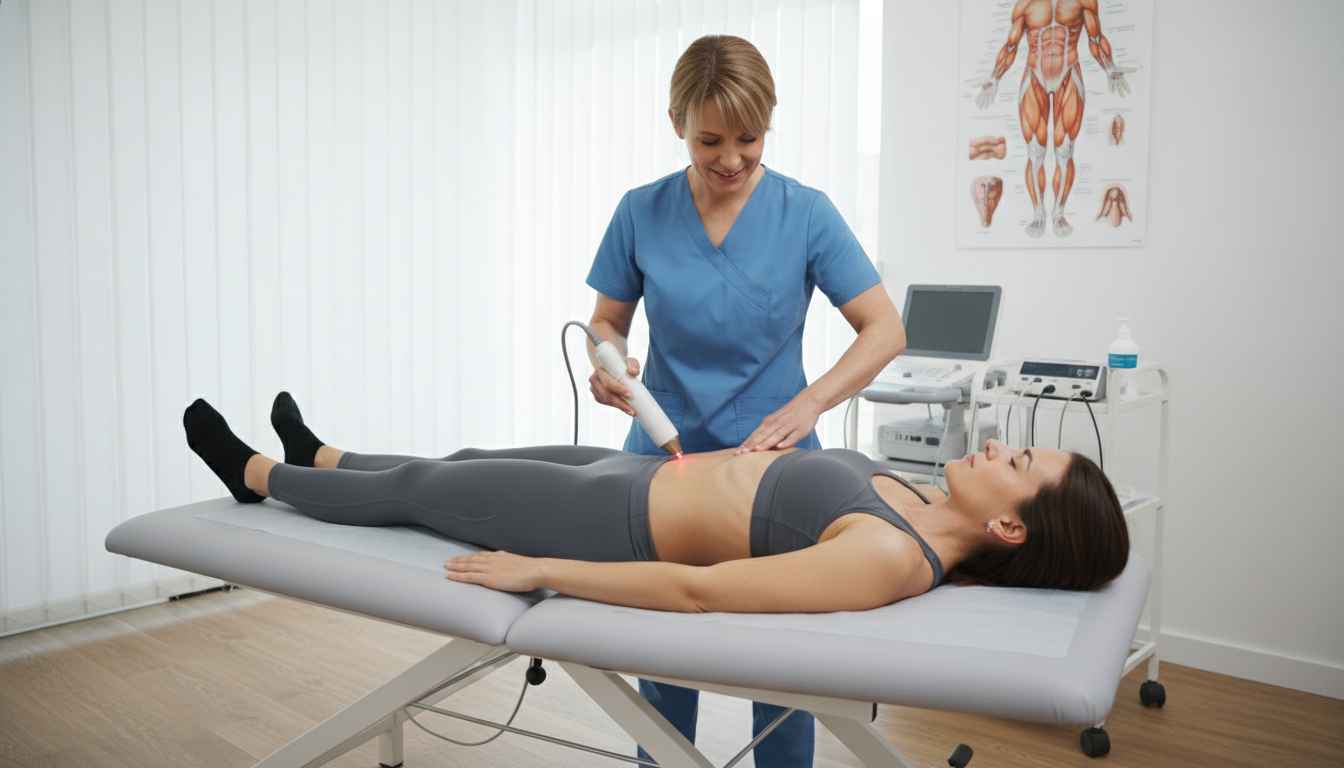
Diastasis Recti Abdominis (DRA) remains one of the most common musculoskeletal sequelae of pregnancy, affecting a significant percentage of women well into the postpartum period. While the separation of the rectus abdominis muscles is a natural adaptation during gestation, the persistence of the Inter-Rectus Distance (IRD) six months postpartum can lead to lumbopelvic instability, pelvic floor dysfunction, and aesthetic dissatisfaction. For physiotherapists, the gold standard of treatment has long been debated: is therapeutic exercise (kinesiotherapy) sufficient, or do we need to integrate advanced modalities to facilitate connective tissue remodeling?
A recent randomized controlled trial published in the Journal of Obstetrics and Gynaecology (2026) offers compelling evidence that a multimodal approach may be the key to superior outcomes.
Study Design: Comparing Monotherapies vs. Combined Protocols
The study, conducted by Alexandre et al., recruited sixty women diagnosed with DRA at six months postpartum. The researchers sought to isolate the efficacy of active exercise against passive physical agents and compare both against a combined protocol. Participants were randomized into three distinct groups:
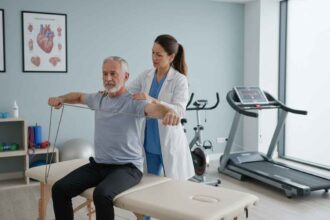
- Group A (Kinesiotherapy): Received a protocol focused solely on guided abdominal exercises.
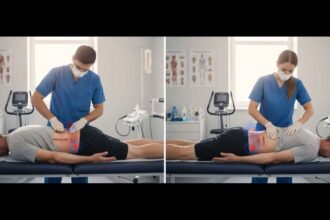
- Group B (Physical Agents): Treated with a combination of electromagnetic shock waves, Transfer of Energy Capacitive and Resistive (TECAR) therapy, and Neuromuscular Electrical Stimulation (NMES).
- Group C (Combined): Received both the kinesiotherapy protocol and the physical agents.
Outcomes were measured using ultrasound for IRD and abdominal perimeter measurements for circumference, with re-evaluation occurring sixty days post-assessment.
Superior Outcomes in Inter-Rectus Distance Reduction
The results highlighted a significant advantage for the combined approach (Group C), particularly regarding the reduction of the linea alba gap. When comparing the supraumbilical region, Group C demonstrated a 0.80 cm greater reduction in IRD compared to the group receiving physical agents alone. More impressively, in the infraumbilical region—often a stubborn area for rehabilitation—the combined group achieved a reduction 0.74 cm greater than kinesiotherapy alone and 0.85 cm greater than physical agents alone.
Furthermore, regarding abdominal aesthetics and functional circumference, both groups utilizing physical agents (Groups B and C) showed significantly greater reductions in infraumbilical circumference compared to exercise alone, with mean differences of approximately 10 cm. This suggests that while exercise is critical for motor control, physical agents may play a vital role in volume reduction and tissue tightening.
Clinical Implications for the Modern Physiotherapist
This study reinforces the concept that optimal DRA rehabilitation requires a two-pronged attack: mechanical loading through exercise to restore neuromuscular control, and biophysical stimulation to aid collagen synthesis and tissue remodeling. Technologies like TECAR and electromagnetic shock waves likely enhance local microcirculation and fibroblast activity, creating a more fertile environment for the linea alba to regain tension when subjected to the load of kinesiotherapy.
For clinicians managing postpartum populations, integrating these modalities alongside traditional core strengthening protocols appears to accelerate recovery and provide superior closure of the rectus diastasis compared to either intervention in isolation.
References
Alexandre, D., Geyson, M., Lígia de Oliveira, R., Mariano, S. V., Prazeres Balbino, F. P., Barros, L. T. D. C., Roxana, N. K., de Morais, C. E., Eliane Maria, D. S., Bianca Santana, D. S., & Froes, M. P. (2026). Physiotherapy with kinesiotherapy and physical agents to reduce postpartum diastasis recti: a randomised trial. Journal of Obstetrics and Gynaecology.
https://pubmed.ncbi.nlm.nih.gov/41575021/