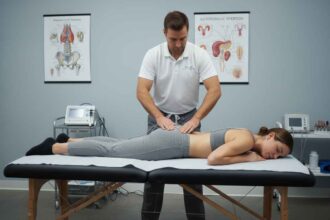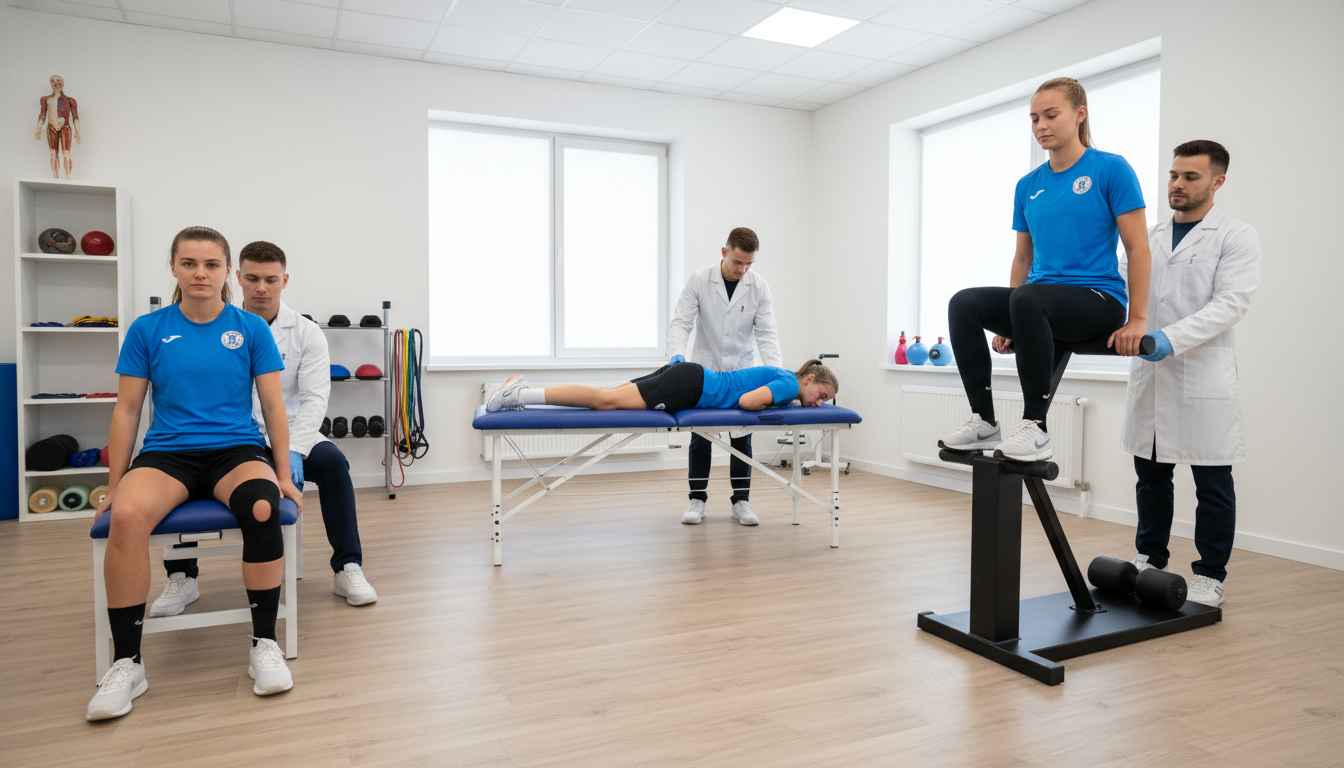
Hamstring strain injuries (HSIs) remain the most prevalent non-contact injury in female football, with the high-velocity demands of sprinting acting as a primary mechanism of injury. For sports physiotherapists, the challenge lies not only in rehabilitation but in implementing effective preventative strategies that address the considerable strength requirements of both the knee flexors and hip extensors. While the Nordic Hamstring Exercise (NHE) has long been considered the gold standard, compliance can be an issue due to its difficulty and associated delayed onset muscle soreness (DOMS).
A recent 2026 randomized controlled trial published in PLoS One by Whyte et al. investigates whether alternative loading patterns might offer similar benefits. This study provides crucial data for clinicians looking to diversify their injury prevention programs without sacrificing efficacy.
Comparing Three Distinct Loading Patterns
The study recruited 35 healthy female footballers from Dublin City University. The participants were randomized into three distinct intervention groups for a 4-week training block:
- Nordic Hamstring Exercise (NHE): Focused on supramaximal eccentric knee flexion.
- Single Leg Hamstring Bridge (SLHB): Focused primarily on hip extension with isometric knee stability.
- Razor Hamstring Curl (RHC): A closed-kinetic chain exercise involving hip flexion and extension while maintaining knee flexion.
Researchers measured peak torque variables for isometric knee flexion, eccentric knee flexion, and isometric hip extension, alongside a battery of sprint performance metrics (0-5m, 0-30m times, and horizontal power).
Outcomes: Strength Gains Without Superiority
The results of the trial offer promising news for clinical flexibility. Following the 4-week intervention, participants in all three groups demonstrated significant increases in strength measurements. Specifically, significant time effects were observed for:
- Isometric knee flexor peak torque (p < 0.001).
- Knee flexor peak torque during NHE testing (p = 0.008–0.014).
- Isometric hip extensor peak torque at both 0° and 30° of hip flexion.
Crucially, there were no significant interaction effects between the groups. This suggests that the Single Leg Hamstring Bridge and the Razor Hamstring Curl are as effective as the Nordic Hamstring Exercise for developing short-term posterior chain strength in female athletes.
The Disconnect Between Strength and Speed
Despite the clear improvements in isolated muscle strength, none of the intervention groups saw significant improvements in sprint performance variables (acceleration, maximal velocity, or horizontal power) over the 4-week period. This finding highlights a common clinical paradox: strength gains do not automatically transfer to functional performance improvements in the short term.
The authors suggest that a duration of four weeks is sufficient to induce neural adaptations and strength increases but is likely insufficient to alter the mechanical properties required for enhanced sprint speed. Furthermore, the vector specificity of these floor-based exercises may not translate directly to the upright mechanics of sprinting without concurrent technical training.
Clinical Implications for Physiotherapists
For the sports clinician, this study validates the use of exercise variability. If a player finds the NHE too provocative or difficult to perform with correct technique, the SLHB and RHC are viable, evidence-based alternatives that yield comparable strength gains.
However, when the goal is performance enhancement (sprinting speed) rather than solely injury risk reduction, these exercises must be part of a broader, longer-term periodized program. Four weeks of isolated strengthening is enough to build tissue tolerance, but insufficient to make a player faster.
References
Whyte, E., O’Connor, S., Connolly, A., Hession, E., Kennedy, J., O’Boyle, B., Thorp, J., Timmons, S., & Burke, A. (2026). The effects of three hamstring programmes on strength and sprinting performance in female footballers: A randomised controlled trial. PLoS One.