Degenerative Lumbar Spinal Stenosis (DLSS) remains a prevalent and debilitating condition in orthopedic practice, frequently manifesting as significant lower leg radiating pain (LLRP). While Selective Nerve Root Blocks (SNRB) and pharmacotherapy are standard medical interventions for managing acute neuropathic symptoms, long-term pain management and functional recovery often require a more robust approach. For physiotherapists, the question remains: does adding a structured, multimodal conservative care package to standard medical management yield better outcomes?
A recent 2026 Randomized Controlled Trial published in Medicina investigates this specific query. The study evaluates the efficacy of Comprehensive and Integrative Medical Services (CIMS)—a protocol combining manual therapy, acupuncture, and cupping—when used as an adjunct to SNRB and pharmacotherapy.
Study Methodology: CIMS vs. Standard Care
The research team conducted a single-center, assessor-blinded randomized controlled trial involving 77 adults diagnosed with DLSS. Inclusion criteria required a LANSS score > 7 and a Visual Analog Scale (VAS) score > 5, ensuring a sample population with significant neuropathic pain.
Participants were randomized into two parallel groups:
- Control Group (n=39): Received standard medical care, defined as SNRB plus pharmacotherapy (limaprost and pregabalin).
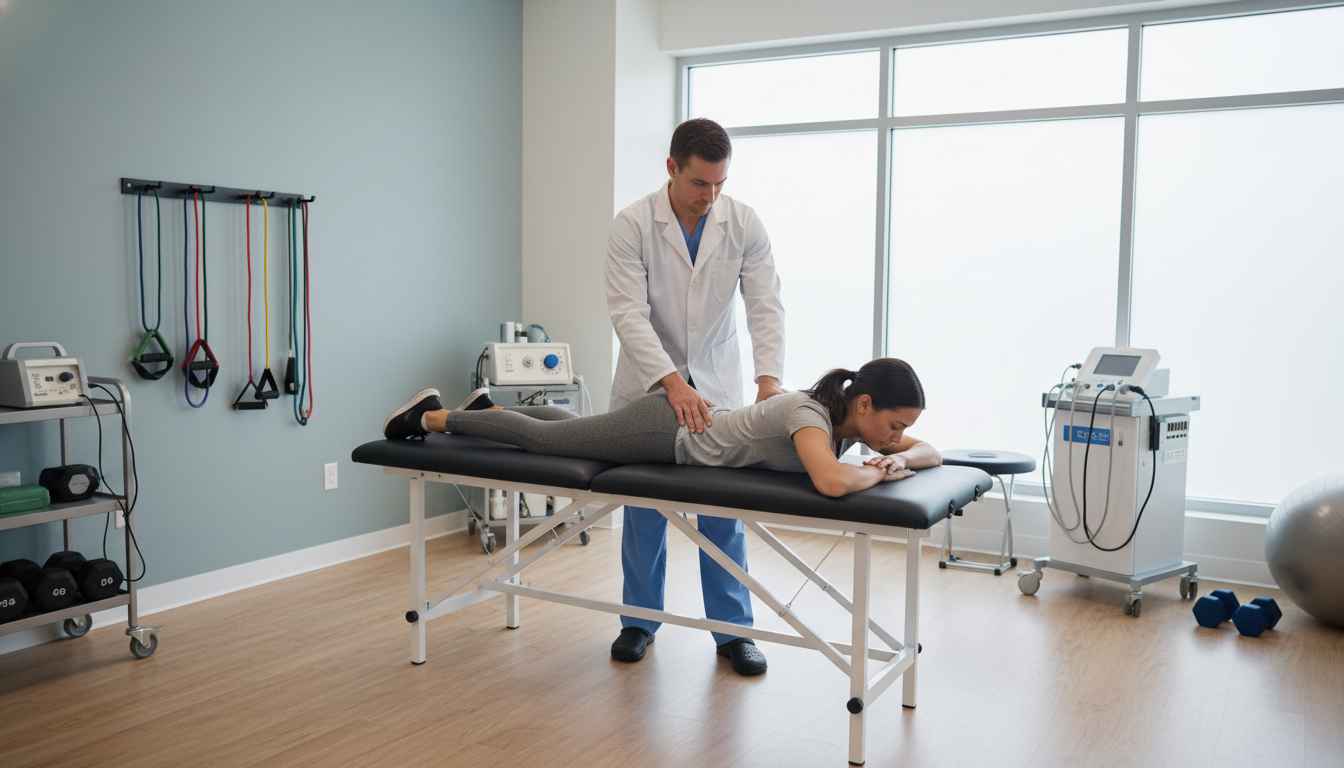
- Experimental Group (n=38): Received the same standard medical care plus the CIMS protocol. The CIMS intervention was delivered eight times over a 4-week period and included manual therapy techniques alongside acupuncture and cupping.
The primary outcome measure was pain intensity (VAS) assessed at baseline, and weeks 4, 8, and 12. Secondary outcomes included the Oswestry Disability Index (ODI), the Roland-Morris Disability Questionnaire (RMDQ), and the SF-36 quality of life survey.
Key Findings: Significant Reductions in Pain Intensity
The results highlighted a clear advantage for the multimodal approach regarding pain modulation. While both groups started with comparable baseline pain levels (VAS ~4.7), the trajectory of recovery differed significantly over the 12-week follow-up.
By week 12, the experimental group demonstrated superior pain reduction compared to the control group (VAS 3.98 ± 1.98 vs. 4.98 ± 1.68). Repeated-measures ANOVA identified a significant time × group interaction (p = 0.040), indicating that the addition of CIMS provided a statistically significant benefit in alleviating pain beyond what SNRB and medication could achieve alone.
Interestingly, while pain scores improved, no significant interactions were observed across the SF-36 domains or functional disability scores (ODI/RMDQ) between the groups. This suggests that while the integrative approach effectively dampens neuropathic pain signaling, functional restoration may require longer interventions or more active rehabilitation components than provided in the 4-week window.
Clinical Implications for Physiotherapists
For the manual therapist, this study reinforces the value of “stacking” conservative modalities with medical interventions. The high adherence rate and lack of adverse events in the study confirm that integrating manual therapy within a multimodal medical model is safe for DLSS patients.
While the study utilized a specific combination (including acupuncture), the core finding supports the hypothesis that passive conservative therapies are effective adjuncts for pain modulation in spinal stenosis. Clinicians should consider coordinating with medical providers to time manual therapy sessions concurrently with nerve block procedures to maximize the window of pain relief.
References
Ko, S. B., Kwak, S. G., & Kim, H. C. (2026). The Effect of Comprehensive and Integrative Medical Services on Patients with Degenerative Lumbar Spinal Stenosis: A Randomized Controlled Study. Medicina (Kaunas, Lithuania). https://pubmed.ncbi.nlm.nih.gov/41597511/