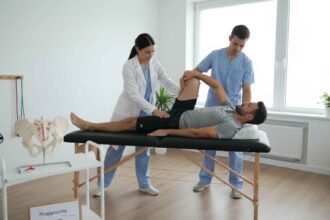
For physiotherapists managing chronic rotator cuff (RTC) tears, the treatment landscape often involves a multimodal approach combining manual therapy, therapeutic exercise, and medical interventions such as corticosteroid (CS) injections. While injections are frequently utilized to manage inflammation and pain, their long-term efficacy and impact on sensorimotor function remain topics of debate. A significant 2025 randomized controlled trial published in the Journal of Hand Therapy provides compelling evidence suggesting that Mulligan Mobilization with Movement (MWM) may offer superior clinical outcomes compared to corticosteroid injections when combined with conventional exercise.
The Clinical Dilemma: Manual Therapy vs. Injection
The management of RTC tears requires addressing not only tissue integrity and pain but also the complex biomechanics of the shoulder complex. Corticosteroid injections are a standard medical intervention intended to reduce inflammation, yet they do not address the mechanical positional faults or the proprioceptive deficits often associated with shoulder pathology. Conversely, the Mulligan concept posits that minor positional faults in joint geometry cause pain and functional limitation. By correcting these faults via MWM, therapists aim to restore pain-free movement and improve neurophysiological output.
Study Methodology: MWM Against the Needle
To determine the most effective intervention, researchers Menek and Menek (2025) conducted a single-blinded randomized clinical trial involving 60 participants diagnosed with RTC tears. The participants were allocated into two distinct treatment arms:
- Mulligan Group (MM): Received Mobilization with Movement techniques alongside a conventional exercise program.
- Corticosteroid Group (CS): Received a CS injection in addition to the same conventional exercise program.
Outcomes were measured at baseline and after three weeks, evaluating the Visual Analog Scale (VAS) for pain, the DASH questionnaire for functionality, Active Range of Motion (AROM), and Joint Position Sense (JPS) to assess proprioception.
Superior Outcomes in Range of Motion and Proprioception
While both groups demonstrated improvement over the three-week period—highlighting the baseline efficacy of therapeutic exercise—the Mulligan mobilization group demonstrated statistically and clinically superior results. The data revealed that the MM group significantly outperformed the CS group in pain reduction and AROM across all planes (flexion, abduction, extension, external and internal rotation).
Perhaps most notably for manual therapists, the effect sizes were substantial (Cohen’s d range 0.82–3.2), indicating a profound difference between the two interventions. Furthermore, the improvements in AROM for the manual therapy group exceeded the Minimum Clinically Important Difference (MCID) and Minimal Detectable Change (MDC90), confirming that these were not just statistical anomalies but tangible functional gains for the patients.
Restoring Sensorimotor Control
A key finding in this study was the evaluation of proprioception (Joint Position Sense) at 30° and 60° of flexion and abduction. The Mulligan group showed significantly better restoration of joint position sense compared to the injection group. This supports the theory that MWM does more than mechanically mobilize a joint; it likely modulates afferent input to the central nervous system, enhancing the patient’s sensorimotor control. In contrast, while injections may chemically suppress pain, they do not inherently retrain the neuromuscular system.
Clinical Implications for Physiotherapists
Based on this RCT, physiotherapists should consider prioritizing Mulligan Mobilization with Movement over referrals for corticosteroid injections in the short-term management of RTC tears. The combination of MWM and exercise appears to provide a more holistic recovery by addressing pain, mechanical restrictions, and proprioceptive deficits simultaneously.
References
Menek, B., & Menek, M. Y. (2025). The efficacy of Mulligan mobilization and corticosteroid injection on pain, functionality, and proprioception in rotator cuff tears: A randomized controlled trial. Journal of Hand Therapy.