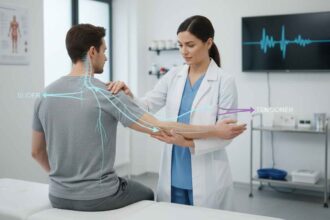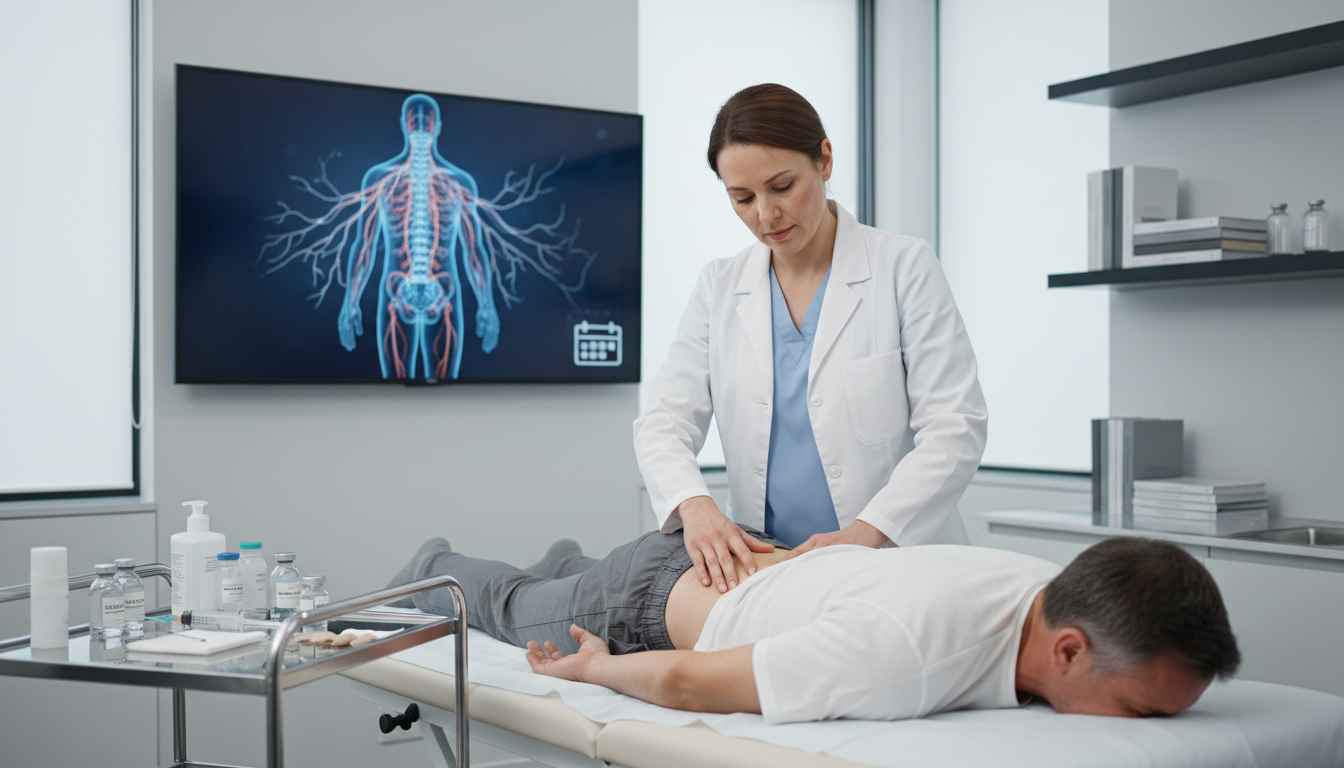
Lumbar radicular pain (LRP) remains one of the most challenging conditions encountered in orthopaedic rehabilitation. Characterized by radiating pain, paresthesia, and potential motor weakness, LRP frequently leads to significant disability and reduced quality of life. While conservative management—including physiotherapy and manual therapy—is the cornerstone of treatment, pharmacological interventions are often required to manage acute inflammatory phases. Among these, glucocorticoid therapy has been a long-standing option, yet literature regarding its efficacy, particularly via intramuscular (IM) administration, remains inconsistent.
A recent randomized controlled trial (RCT) published in BMC Musculoskeletal Disorders in July 2025 seeks to clarify the role of systemic steroid injections. This study provides valuable data for physiotherapists determining how medical management interacts with functional rehabilitation timelines.
Study Design and Methodology
The study, conducted by Boga Vijdan et al., evaluated 60 patients presenting with lumbar radicular pain. The participants were randomized into two distinct groups:
- The Glucocorticoid Group (GC): Received an intramuscular injection of betamethasone.
- The Placebo Group (PB): Received an intramuscular injection of isotonic sodium chloride.
Outcomes were measured using the Visual Analog Scale (VAS) for pain intensity, the Oswestry Disability Index (ODI) for functional impairment, the Nottingham Health Profile (NHP) for quality of life, and Electroneuromyography (ENMG) to assess physiological nerve status. Evaluations were conducted at baseline, one week, one month, and three months post-injection.
Analyzing the Outcomes: Pain Reduction vs. Functional Recovery
The results highlight a nuanced distinction between symptomatic relief and functional restoration. Both the GC and PB groups showed improvements in pain and disability over the three-month period, suggesting that natural history and the placebo effect play roles in LRP recovery. However, the Glucocorticoid group demonstrated a statistically significant superiority in pain reduction (VAS scores) and the pain subscale of the NHP compared to the placebo group.
Interestingly, while pain scores favored the steroid group, the improvements in the Oswestry Disability Index (ODI) and physical mobility scores were not significantly different between the two groups over time. This suggests that while steroids are highly effective at dampening the inflammatory cascade responsible for nociception, they do not automatically translate to superior biomechanical function without concurrent rehabilitation.
Furthermore, ENMG findings revealed no significant differences between groups regarding nerve conduction parameters, although fibrillation potentials disappeared in both groups over time. This indicates that IM steroids do not necessarily accelerate the physiological repair of the nerve root itself compared to placebo.
Implications for Orthopaedic Rehabilitation
For the manual therapist and physiotherapist, these findings reinforce the concept of a "window of opportunity." Intramuscular betamethasone injections appear effective in managing the acute pain associated with radiculopathy, outperforming placebo in symptom control. However, the lack of superior outcomes in disability scores underscores that pain relief alone does not resolve functional impairments.
Clinicians should view IM glucocorticoids not as a curative monotherapy, but as a potent adjunct that may lower pain thresholds enough to facilitate earlier or more effective engagement with mechanical loading, neural mobilization, and graded exercise therapy.
References
Boga Vijdan, E., Basaran, S., & Balal, M. (2025). Efficacy of intramuscular glucocorticoid injection in patients with lumbar radicular pain: a randomized controlled trial. BMC Musculoskeletal Disorders.