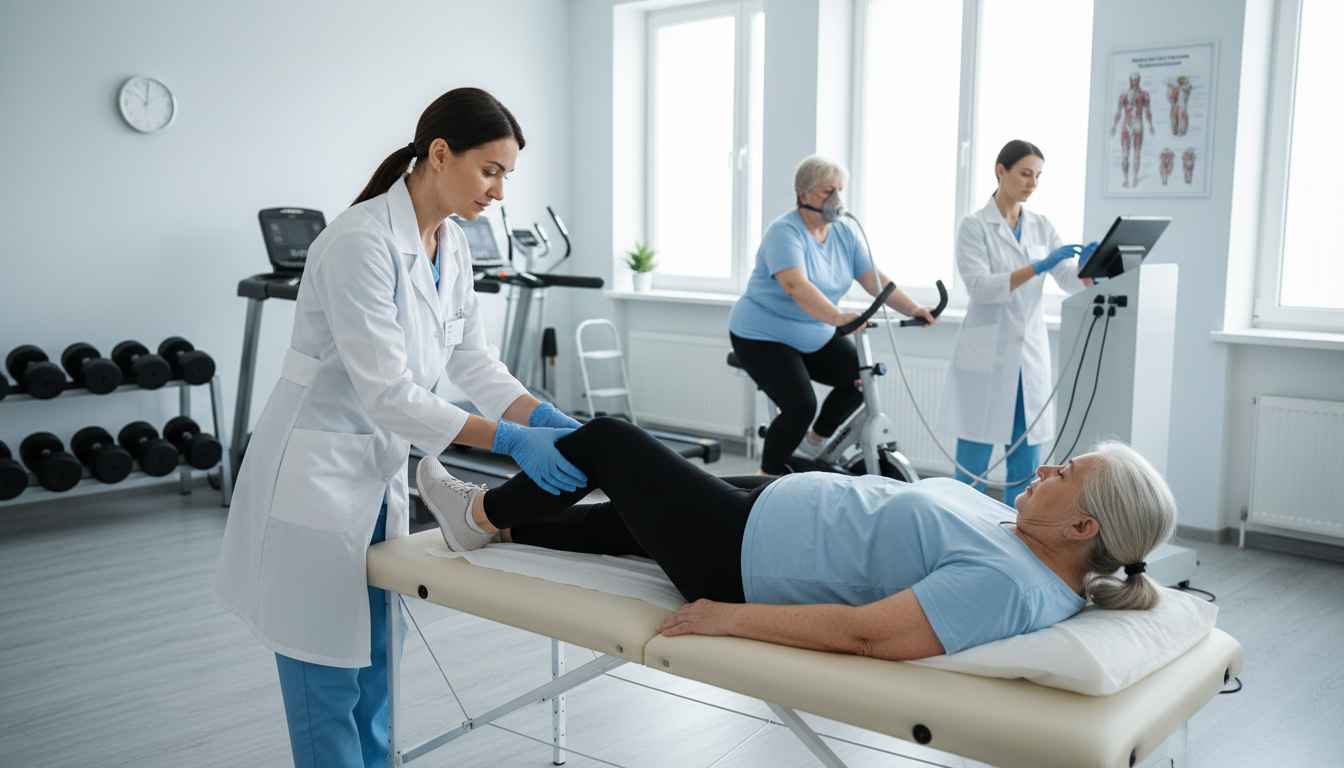
In geriatric rehabilitation, addressing obesity and metabolic syndrome (MetS) is a frequent and complex challenge. Statistical data indicates that obesity rates in older women can be significantly higher than in men, leading to a cascade of functional decline and increased mortality risk. For physiotherapists seeking evidence-based interventions to maximize patient outcomes, recent research published in Geriatrics & Gerontology International (2026) offers compelling evidence regarding the efficacy of concurrent training (CT) performed under hypoxic conditions.
The Hypoxic Advantage in Concurrent Training
The study, conducted by Jang and Park, investigated whether combining resistance and aerobic exercise (concurrent training) in a normobaric hypoxic environment yields superior results compared to standard normoxic conditions. The randomized controlled trial focused on obese elderly women, a demographic particularly vulnerable to the compounding effects of sarcopenia and metabolic dysregulation.
Participants were divided into two groups: a Normoxia group (NMX) and a Hypoxia group (HPX). Both groups adhered to the same concurrent training protocol three times a week for 12 weeks. However, the HPX group performed these exercises within a hypoxic chamber, simulating an environment with reduced oxygen availability. This methodology aims to trigger greater physiological adaptations through increased metabolic stress without necessarily increasing mechanical load.
Significant Gains in Physical and Metabolic Function
The results of this RCT were profound. While concurrent training is generally acknowledged as beneficial, the addition of hypoxia acted as a potent catalyst for improvement. The researchers observed statistically significant differences between the HPX and NMX groups across almost all measured variables.
In terms of physical function, the hypoxic group demonstrated superior gains in muscle strength (p < 0.001) and aerobic capacity (VO2max, p < 0.01). For physiotherapists, this suggests that hypoxic training may be a more efficient modality for restoring functional independence in elderly populations.
Biochemically, the impact was equally impressive. The HPX group showed significant improvements in lipid profiles, including reductions in triglycerides, LDL-cholesterol, and free fatty acids, alongside increases in HDL-cholesterol. Furthermore, glucose metabolism markers—specifically insulin sensitivity and HOMA-IR scores—improved significantly (p < 0.0001) in the hypoxic group compared to the normoxic group.
Clinical Implications for Geriatric Rehabilitation
The findings of this study have immediate relevance for clinical practice. The data suggests that for obese elderly women, standard exercise protocols may be significantly enhanced by environmental modification. The hypoxic environment appears to amplify the metabolic cost of exercise, driving greater improvements in body composition and metabolic risk factors.
For clinics equipped with hypoxic chambers or altitude simulation technology, this protocol offers a promising avenue for treating metabolic syndrome. By integrating concurrent training under hypoxia, clinicians may help patients achieve rapid improvements in both physical function and metabolic health, effectively mitigating the risks associated with obesity and aging.
References
Jang, J., & Park, H. Y. (2026). The effects of concurrent training under hypoxia on physical function and metabolic syndrome in obese elderly women in Korea. Geriatrics & Gerontology International. https://pubmed.ncbi.nlm.nih.gov/41672742/