The Neural Component of Adhesive Capsulitis
Frozen shoulder, or adhesive capsulitis, remains one of the most challenging conditions in orthopaedic rehabilitation. Characterized by a progressive loss of glenohumeral (GH) joint mobility and significant pain, the pathology is often viewed strictly through a capsular lens. However, emerging research suggests that limited GH mobility may be intrinsically linked to increased neural mechanosensitivity. This neural involvement can exacerbate pain and functional limitations, creating a cycle of immobility and sensitivity.
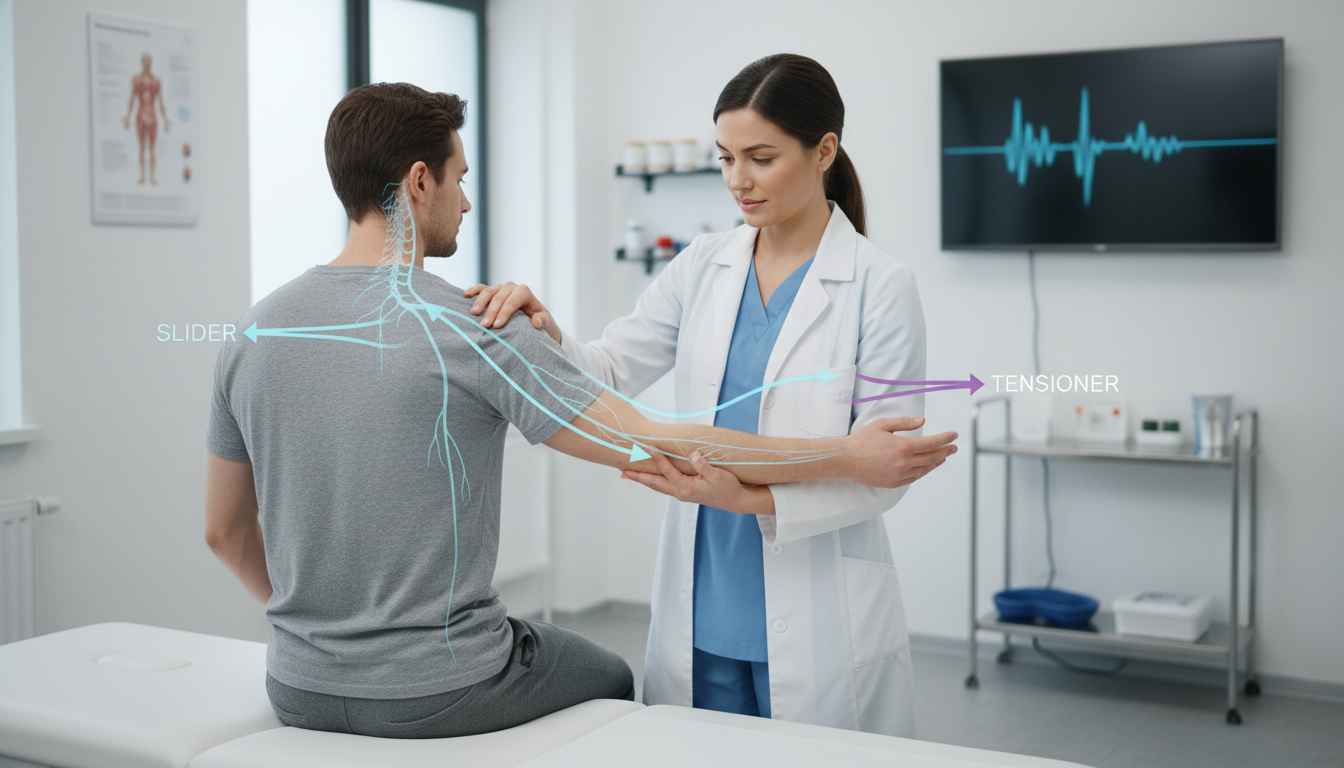
While manual therapy and joint mobilization are standard practice, the integration of neurodynamic techniques remains a point of clinical debate. Specifically, the choice between “slider” (flossing) techniques and “tensioner” techniques is crucial. A recent Randomized Controlled Trial (RCT) by Hegazy et al. (2026) sheds light on this decision, offering evidence-based guidance for physiotherapists treating frozen shoulder.
Study Design: Comparing Neurodynamic Sequences
The study, published in Physiotherapy Research International, investigated the comparative effectiveness of slider versus tensioner median nerve mobilization techniques. The researchers recruited sixty-two patients diagnosed with frozen shoulder and randomly assigned them to two groups:
- Group A (Slider Group): Received the slider technique of median nerve mobilization.
- Group B (Tensioner Group): Received the tensioner technique.
To ensure clinical relevance and isolate the variable of neural mobilization, both groups also received standard GH joint mobilization and traditional physical therapy. The intervention protocol was robust, consisting of three sessions per week for a duration of six weeks. Outcomes were measured using the Visual Analog Scale (VAS) for pain, the Shoulder Pain and Disability Index (SPADI) for functional disability, and a conventional goniometer for passive range of motion (ROM) including abduction, internal rotation, and external rotation.
Clinical Outcomes: Sliders Demonstrate Superiority
Post-treatment analysis revealed significant improvements in both groups, reaffirming the general utility of neurodynamics in frozen shoulder management. However, the intergroup comparison highlighted a clear clinical advantage for the slider technique.
Statistical analysis showed significant differences favoring Group A (Slider) across all measured outcomes:
- Pain Intensity (VAS): Significant reduction (p = 0.003).
- Functional Disability (SPADI): Significant improvement (p < 0.001).
- Range of Motion: Significant gains in passive abduction, external rotation, and internal rotation (all p < 0.001).
Clinical Rationale and Application
The superiority of slider techniques in this context aligns with current neurodynamic theory. Frozen shoulder is often an inflammatory and highly sensitized condition. Tensioner techniques, which elongate the nerve bed and increase intraneural pressure, may occasionally provoke a sensitized system despite their mechanical benefits.
Conversely, slider techniques facilitate the excursion of the nerve relative to surrounding interfaces without generating significant tension. This “milking” effect helps reduce intraneural edema and improve axoplasmic flow without provoking the nociceptive response associated with high-tension loads. For patients with frozen shoulder, where pain inhibition is a major barrier to movement, the non-aggressive nature of sliders appears to provide a better window for restoring ROM and function.
Based on these findings, clinicians should consider prioritizing median nerve sliders over tensioners in the early and intermediate phases of frozen shoulder rehabilitation to maximize pain relief and functional gains.
References
Hegazy, M. M. A., Mahmoud, W. S. E., & Ahmed, A. S. (2026). Slider Versus Tensioner Median Nerve Mobilization in Patients With Frozen Shoulder Randomized Controlled Comparative Study. Physiotherapy Research International. https://pubmed.ncbi.nlm.nih.gov/41549328/