Rethinking Trunk Stabilization for Chronic Symptoms
Trunk-stabilization exercises have long been a foundational cornerstone in the orthopaedic rehabilitation of nonspecific low back pain (LBP). While traditional clinical protocols focus heavily on static and dynamic stabilization under predictable environments, the inclusion of unstable conditions—specifically manual or environmental perturbation training—remains an area ripe for clinical exploration. Patients suffering from chronic low back pain often display delayed muscle reaction times and compromised proprioception, which predictable exercises may not fully address. A recent randomized controlled trial aimed to establish whether integrating unexpected perturbation components into standard training regimens yields superior clinical outcomes in trunk-muscle endurance, disability reduction, and vital psychosocial metrics compared to traditional exercise alone.
Designing the Rigorous Clinical Trial
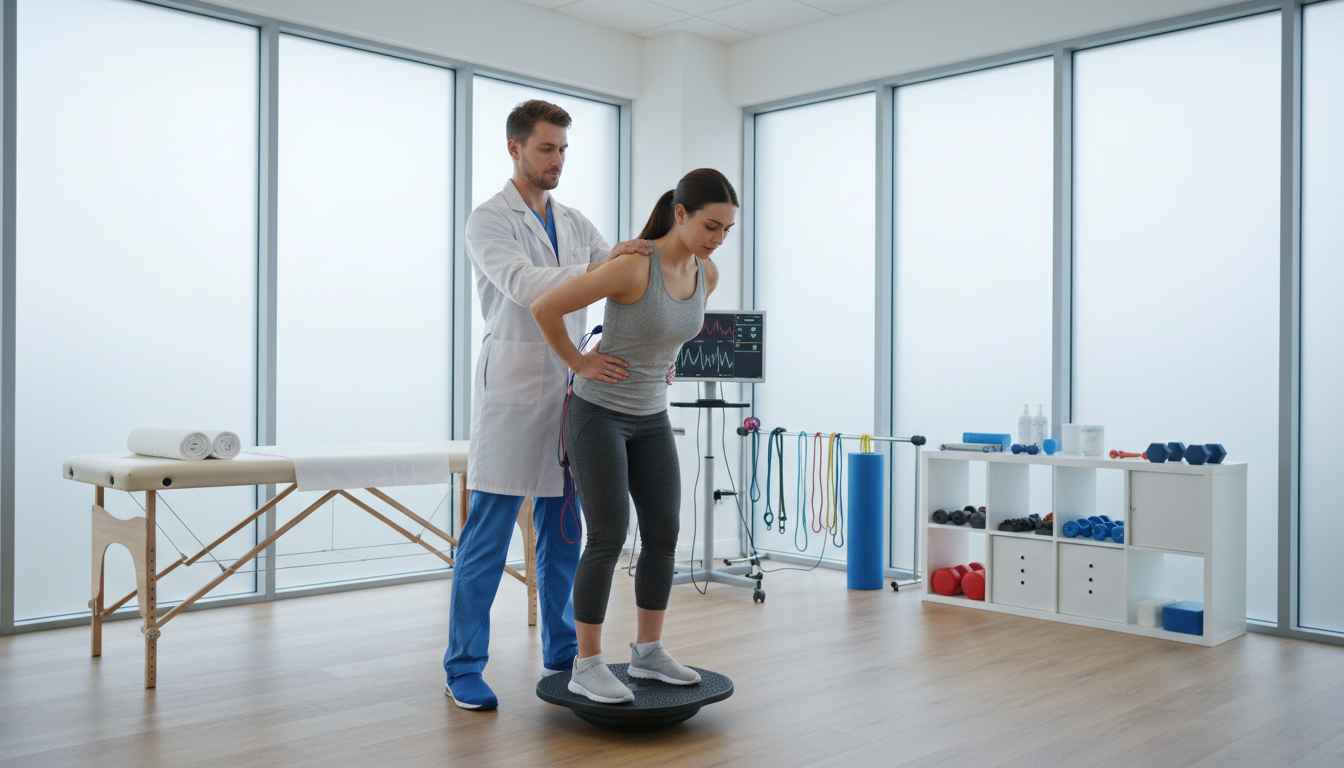
Researchers conducted a highly rigorous randomized controlled clinical trial involving 44 patients (30 women and 14 men, with an average age of 33 years) suffering from chronic nonspecific LBP. These participants had endured symptoms for an average of over three years, making them highly representative of the persistent cases frequently seen in outpatient physiotherapy clinics. The cohort was randomly assigned to one of two groups: a standard exercise group (EG) and a perturbation group (PG). The standard exercise group engaged in a traditional two-phase trunk-based exercise program. In stark contrast, the perturbation group underwent a more advanced four-phase training program that actively integrated perturbation stimuli into the conventional exercises. Both groups successfully completed their respective protocols under the supervision of physiotherapists twice a week over an intensive eight-week duration.
Superior Clinical Outcomes Unveiled
The primary outcome measures assessed were core trunk endurance, meticulously evaluated using the McGill endurance tests, and LBP-related disability, captured via the widely validated Oswestry Disability Index. Secondary performance and psychosocial metrics included pain intensity on the Visual Analog Scale, functional mobility via the timed up-and-go test, quality of life through the Short Form 12, fear-avoidance attitudes via the Fear-Avoidance Beliefs Questionnaire, and overall patient satisfaction. While both cohorts demonstrated notable, statistically significant improvements across all measured variables, the perturbation group exhibited clear superiority. Specifically, the perturbation group showed massive, statistically significant gains in trunk-muscle endurance across all planes—including flexors, extensors, and bilateral lateral flexors. Furthermore, this group achieved significantly better scores on the Oswestry Disability Index, demonstrating large between-group effect sizes. Interestingly, secondary outcomes also heavily favored the perturbation cohort. Functional mobility improved more substantially, and total scores on the Fear-Avoidance Beliefs Questionnaire decreased more dramatically. Patient satisfaction was also measurably higher among those receiving the perturbation training.
Practical Implications for Rehabilitation Professionals
For orthopaedic and manipulative physiotherapists, this trial provides highly robust, actionable evidence supporting the immediate evolution of core stabilization protocols. Moving beyond predictable, stable exercises to include reactive, perturbation-based movements forces the neuromuscular system to adapt rapidly to sudden postural demands. This dynamic challenge not only significantly enhances muscular endurance but also builds crucial patient confidence, effectively lowering fear-avoidance behaviors that frequently stall rehabilitation progress. Integrating perturbation training is an exceptionally effective, evidence-based strategy for optimizing functional recovery in the clinical management of nonspecific low back pain.
References
Eker, T. A., Yetişyiğit, Y., & Akbaba, Y. A. (2026). Perturbation Training for Nonspecific Low Back Pain: A Randomized Controlled Trial. Journal of Athletic Training. https://pubmed.ncbi.nlm.nih.gov/41788596/