The Push for Accelerated Recovery in Total Knee Arthroplasty
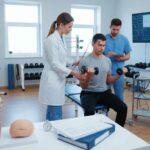
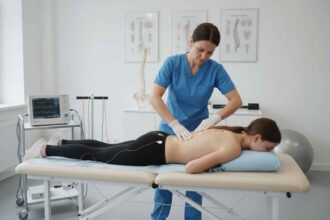
As orthopaedic physical therapists, we are constantly seeking innovative strategies to optimize postoperative recovery for patients undergoing total knee arthroplasty (TKA). Traditionally, early rehabilitation initiated within four hours following surgery has focused primarily on passive range of motion exercises and hands-on manual therapy. However, emerging robotic technologies are rapidly changing the landscape of acute postoperative care. A recent randomized controlled trial highlights the significant clinical benefits of integrating a single-joint Hybrid Assistive Limb (HAL-SJ) into the immediate postoperative rehabilitation protocol.
Robotic Assistance Meets Early Postoperative Mobilization
The randomized controlled trial involved 68 participants who underwent primary TKA for knee osteoarthritis. To accurately assess the efficacy of the robotic intervention, the researchers divided the participants into three distinct groups: an early single-joint hybrid assistive limb group (rehabilitation within four hours), a standard HAL-SJ group, and a conventional control group. The primary objective was to determine whether deploying this advanced biofeedback-driven exoskeleton mere hours after surgery could improve functional outcomes, expedite the recovery timeline, and enhance overall patient satisfaction compared to standard care alone.
Key Clinical Outcomes and Functional Gains
The study yielded highly promising results for orthopaedic rehabilitation professionals. Most notably, patients in the early HAL-SJ group demonstrated significantly higher Knee Injury and Osteoarthritis Outcome Score (KOOS) Quality of Life scores at the 12-month mark compared to the control group. Furthermore, the recovery time required to resolve extension lag—a common and frustrating hurdle in early TKA recovery—was significantly shorter in the early HAL-SJ group than in both the standard HAL-SJ and control cohorts. From a mobility standpoint, the early intervention group also achieved superior knee flexion range of motion at one week post-surgery. These accelerated early gains lay a crucial foundation for optimal long-term joint function and mobility.
Integrating HAL-SJ into Physiotherapy Practice
For physiotherapists managing acute postoperative TKA pathways, these findings are highly encouraging. Implementing the HAL-SJ within the initial four-hour window not only accelerated the restoration of knee flexion and extension mechanics but did so without exacerbating postoperative pain or joint swelling. The exoskeleton serves as a safe, feasible, and highly effective adjunct to early mobility protocols. While further studies are necessary to fully map out its long-term benefits and broader clinical relevance, incorporating biofeedback-assisted robotics appears to be a powerful tool for elevating patient-reported outcomes and overall quality of life.
References
Watabe, T., Muramatsu, R., Sengoku, T., Sakurai, G., Yoshida, S., & Taniguchi, Y. (2026). Effect of early hybrid assistive limb assisted rehabilitation on functional outcomes and patient satisfaction after total knee arthroplasty: a randomized controlled trial. Journal of rehabilitation medicine. https://pubmed.ncbi.nlm.nih.gov/41804269/