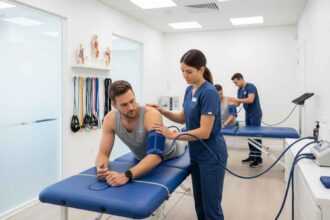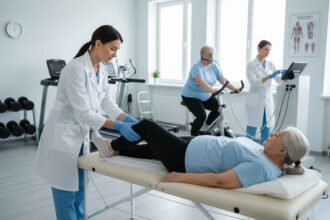
Emergency departments (EDs) globally are facing unprecedented overcrowding, leading to increased wait times and significant strain on medical personnel. A substantial portion of this volume consists of patients presenting with minor musculoskeletal disorders (MSKD), such as acute back pain, sprains, and soft tissue injuries. Traditionally, these patients wait hours to see an emergency physician, only to be referred out for rehabilitation or discharged with analgesics. However, a shifting paradigm in healthcare delivery is placing physiotherapists at the forefront of acute care triage.
Addressing the Musculoskeletal Burden in Emergency Care
Advanced Practice Physiotherapy (APP) models suggest that physiotherapists, acting as primary contact providers in the ED, can significantly alleviate the burden on physicians while improving patient access to specialized care. While preliminary data has supported this model, high-quality, large-scale randomized controlled trials (RCTs) including robust cost analyses have been necessary to solidify the evidence base for widespread implementation.
A notable protocol published in Trials (February 2023) by Matifat et al. outlines a rigorous multicenter stepped-wedge cluster RCT designed to evaluate the efficacy of APP models compared to usual physician care. This study represents a significant step forward in validating the role of the physiotherapist in high-pressure acute environments.
Study Design and Clinical Objectives
The study involves six Canadian emergency departments, aiming to recruit 744 adults presenting with minor MSKDs. The research utilizes a pragmatic cluster design, where hospitals are randomized to a treatment sequence. Patients will either be managed directly by an Advanced Practice Physiotherapist (APPT) or receive standard care from an ED physician.
The primary outcome measure is the Brief Pain Inventory Questionnaire, which assesses the severity of pain and its interference with daily function. This patient-centric focus is crucial, as immediate pain management and functional advice are core competencies of the physiotherapy profession. Secondary measures include the EQ-5D-5L for quality of life, validated disability questionnaires, and an analysis of healthcare resource utilization, such as the frequency of imaging prescriptions and medication use.
Economic Implications and Healthcare Sustainability
One of the most compelling aspects of this trial is its focus on health economic analysis. Using time-driven activity-based costing, the researchers aim to determine the cost-effectiveness of the APPT model from the perspective of the public healthcare system. With healthcare budgets tightening, demonstrating that physiotherapists can deliver equal or superior outcomes at a lower cost is vital for policy advocacy.
The study monitors patients at discharge, as well as at 4, 12, and 26 weeks post-visit. This longitudinal approach will help determine if early physiotherapy intervention in the ED prevents chronicity and reduces revisit rates—a key metric for hospital administrators.
The Future of APP in Orthopaedic Management
For the professional physiotherapy community, this trial highlights the expanding scope of practice. It moves the profession beyond the clinic and into the critical sphere of emergency medicine. If the results align with the hypothesis that APP models offer efficient, patient-centered care, it could catalyze a systemic shift, making physiotherapists standard fixtures in emergency departments worldwide.
References
Matifat, E., Berger Pelletier, E., Brison, R., Hébert, L. J., Roy, J. S., Woodhouse, L., Berthelot, S., Daoust, R., Sirois, M. J., Booth, R., Gagnon, R., Miller, J., Tousignant-Laflamme, Y., Emond, M., Perreault, K., & Desmeules, F. (2023). Advanced practice physiotherapy care in emergency departments for patients with musculoskeletal disorders: a pragmatic cluster randomized controlled trial and cost analysis. Trials, 24, Article 94.