The Shift Towards Ultra-Early Postoperative Mobilization
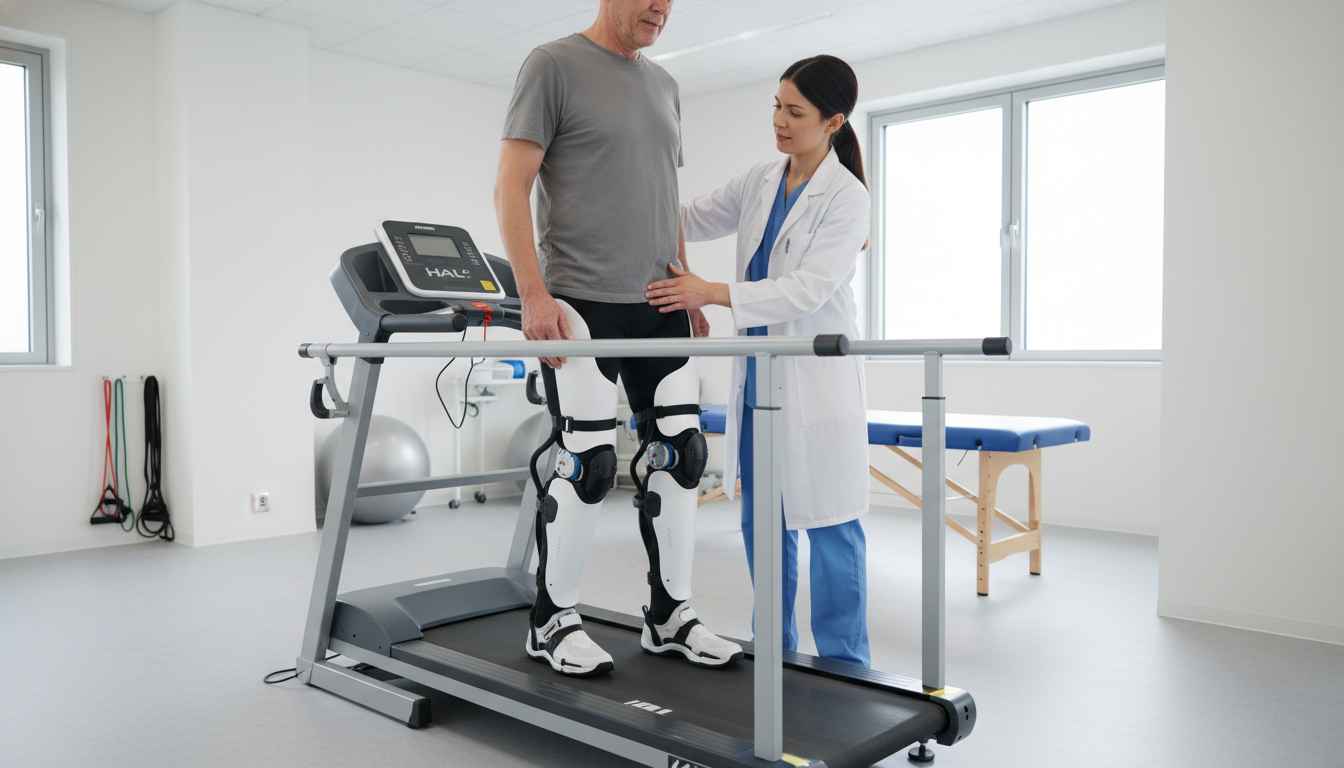
In modern orthopaedic physiotherapy, the timeline for postoperative mobilization following a total knee arthroplasty (TKA) has consistently accelerated. While early rehabilitation typically initiates within the first four hours post-surgery and often consists of gentle passive exercises or manual therapy, the integration of advanced robotic assistance is pushing the boundaries of what our patients can safely achieve. Recent clinical trials highlight the profound potential of robotic adjuncts, specifically the single-joint Hybrid Assistive Limb (HAL-SJ), in reshaping recovery trajectories and maximizing functional independence.
Integrating the Single-Joint Hybrid Assistive Limb (HAL-SJ)
A pioneering single-blinded randomized controlled trial recently investigated the implementation of the HAL-SJ within a strict four-hour window following primary TKA for knee osteoarthritis. The study evaluated 68 participants, strategically dividing them into three distinct cohorts: an early HAL-SJ group receiving intervention within four hours, a standard HAL-SJ group, and a conventional control group. The primary objective was to determine if ultra-early robotic-assisted therapy offers tangible advantages over delayed or conventional rehabilitation protocols without compromising the surgical site or patient comfort.
Accelerated Recovery of Range of Motion and Extension Lag
The short-term clinical outcomes heavily favor the early implementation of the HAL-SJ. At the one-week postoperative mark, patients in the early intervention cohort demonstrated a significantly greater knee flexion range of motion compared to both the standard HAL-SJ (p=0.029) and control (p=0.031) groups. Furthermore, the mitigation of extensor lag—a frequent and frustrating hurdle in early TKA rehab—was markedly faster in the early intervention cohort. The recovery time for extension lag showed statistically significant improvements over both the standard HAL-SJ (p=0.006) and the conventional control groups (p<0.001), indicating that ultra-early robotic engagement efficiently restores neuromuscular control and essential quadriceps activation.
Long-Term Improvements in Quality of Life
Beyond immediate postoperative milestones, the benefits of early HAL-SJ rehabilitation resonate well into the long term. At the comprehensive 12-month follow-up, the Knee Injury and Osteoarthritis Outcome Score (KOOS) regarding quality of life was significantly elevated (p=0.007) for the early HAL-SJ group relative to the controls. Crucially, this aggressive, early mobilization did not come at the cost of patient comfort; researchers noted that these profound functional gains were achieved without exacerbating postoperative pain or joint swelling, confirming the clinical safety of this ultra-early protocol.
Clinical Takeaways for Orthopaedic Physiotherapists
For physiotherapists managing TKA recoveries, these findings present a compelling case for integrating advanced biofeedback and robotic assistance in the immediate postoperative phase. By facilitating safe, active-assisted movement immediately after surgery, the HAL-SJ bridges the critical gap between passive motion and active voluntary control. This neuromuscular re-education is vital for preventing muscle atrophy and overcoming arthrogenic muscle inhibition, which often plagues patients following joint replacement. Integrating these findings into our clinical pathways challenges traditional conservative timelines, urging a paradigm shift toward more proactive, technology-enhanced interventions. While further studies will continue to clarify broader clinical relevance, the current data strongly supports the early application of robotic adjuncts to optimize patient recovery trajectories.
References
Watabe, T., Muramatsu, R., Sengoku, T., Sakurai, G., Yoshida, S., & Taniguchi, Y. (2026). Effect of early hybrid assistive limb assisted rehabilitation on functional outcomes and patient satisfaction after total knee arthroplasty: a randomized controlled trial. Journal of rehabilitation medicine. https://pubmed.ncbi.nlm.nih.gov/41804269/