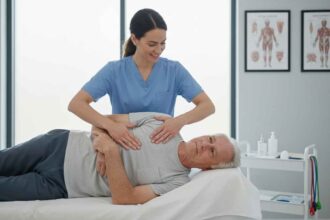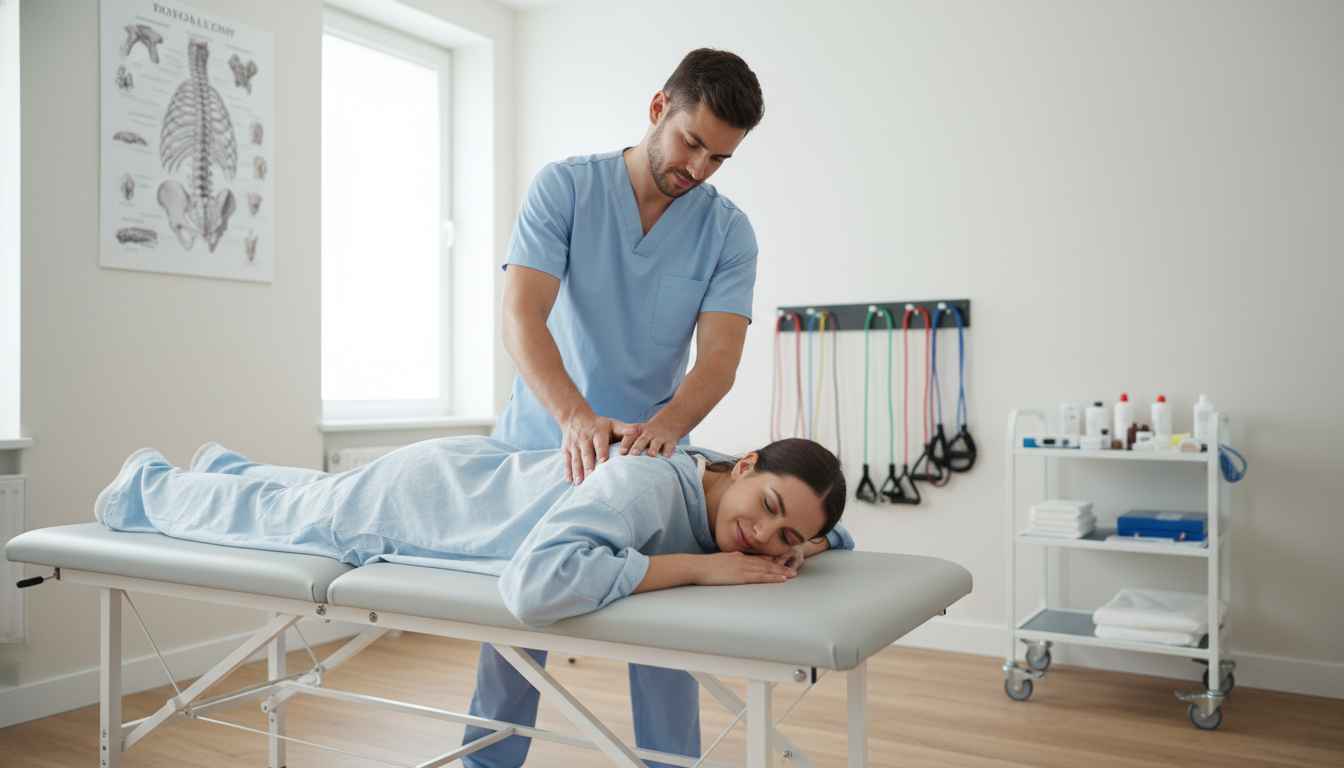
As physiotherapists continue to navigate the post-pandemic landscape, Long COVID (Post-Acute Sequelae of SARS-CoV-2) remains a significant clinical challenge. Patients frequently present with persistent dyspnoea, chest heaviness, and general fatigue long after the viral clearance. While pulmonary rehabilitation is the gold standard, recent evidence suggests that mechanical restrictions in the thoracic spine may contribute to the respiratory burden. A randomized controlled trial published in Respiratory Medicine (December 2025) investigates the efficacy of Thoracic Spinal Manipulation (TSM) as an adjunct to standard rehabilitation.
Integrating Manual Therapy with Pulmonary Rehabilitation
The chest wall functions as a kinetic chain; stiffness in the thoracic spine and costovertebral joints can significantly impede chest wall compliance, thereby increasing the work of breathing. The study, conducted by Aggarwal and Chanda, sought to determine if restoring thoracic mobility could translate to improved pulmonary indices.
The researchers conducted a Randomized Controlled Trial (RCT) involving 42 participants (mean age approx. 24 years) suffering from Long COVID symptoms. The subjects were divided into two cohorts:
- Group A (Experimental): Received Thoracic Spinal Manipulation (TSM) plus pulmonary rehabilitation.
- Group B (Control): Received pulmonary rehabilitation only.
Both groups followed an intensive protocol, attending sessions five times a week for a duration of two weeks. This high-frequency dosage provides a clear window into the immediate to short-term effects of manual intervention on respiratory mechanics.
Clinical Outcomes: Mobility and Lung Function
The results of the trial highlight the potential of manual therapy in respiratory care. Post-intervention analysis revealed that while both groups improved (validating the baseline efficacy of pulmonary rehab), the addition of spinal manipulation yielded superior outcomes in specific domains.
Group A showed statistically significant improvements (p < 0.05) over Group B in pulmonary function and thoracic spine mobility. Biomechanically, this suggests that High-Velocity Low-Amplitude (HVLA) thrusts directed at the thoracic spine may release articular restrictions at the facet and costotransverse joints, allowing for more efficient rib cage mechanics during inspiration and expiration.
However, clinicians should note the nuance in the findings: there were no significant between-group differences regarding thoracolumbar extension and chest expansion measurements, although within-group improvements were significant for both. This implies that while TSM aids functional capacity and segmental mobility, global chest expansion changes may require longer intervention periods or result from the rehabilitation exercises rather than the manipulation alone.
Implications for Physiotherapy Practice
For the orthopaedic manual therapist, this study supports a multimodal approach to Long COVID. Dyspnoea is not solely a parenchymal issue; it often has a musculoskeletal component. Screening Long COVID patients for thoracic stiffness and hypomobility is essential. Where indicated, integrating thoracic manipulation with breathing exercises and aerobic conditioning may accelerate recovery of lung function and reduce the sensation of chest heaviness.
References
Aggarwal, A., & Chanda, A. (2025). Effects of thoracic spinal manipulation in long COVID patients: A randomised controlled trial. Respiratory Medicine.