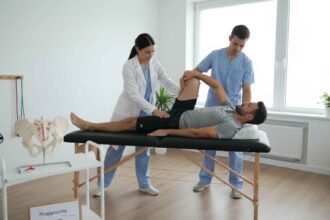
For physiotherapists and manual practitioners, the Autonomic Nervous System (ANS) is a frequent subject of interest. We often attribute the efficacy of manual interventions—such as spinal manipulation or soft tissue mobilization—to their ability to modulate autonomic tone, specifically by enhancing parasympathetic activity. However, a distinct line must be drawn between therapeutic intervention and diagnostic assessment. A recent study published in the Journal of Osteopathic Medicine (August 2025) investigates whether the act of performing osteopathic listening tests inherently alters physiological markers, or if diagnostic touch remains neutral.
Investigating the Physiological Impact of Assessment
Osteopathic listening tests are widely utilized diagnostic tools designed to identify somatic dysfunctions. While previous research has robustly demonstrated that Osteopathic Manipulative Treatment (OMT) can significantly influence heart rate variability (HRV), the physiological impact of the diagnostic phase itself has remained unclear. This distinction is vital for clinicians; if a diagnostic test alters the patient’s baseline physiology, it acts as a confounding variable before treatment even begins.
To address this, researchers Gillet, Gault, and colleagues conducted a randomized study involving 51 osteopathic students. The objective was to evaluate the influence of listening tests on Heart Rate (HR) and HRV markers, specifically the root mean square of successive differences (rMSSD)—a marker of vagal tone—and the low-frequency/high-frequency (LF/HF) ratio.
Methodological Rigor and Control
The participants were randomized into three distinct groups to ensure the validity of the findings:
- Osteopathic Test Group (OTG): Received standard listening tests.
- Light Pressure Group (LPG): Experienced non-therapeutic light pressure to control for the effect of simple touch.
- Control Group (CG): Received no intervention.
Data was collected utilizing validated software during the first and last 30 seconds of the protocol. By including a light pressure group, the authors sought to isolate the specific intent and mechanics of the osteopathic test from the general physiological response to human touch.
The Neutrality of Diagnostic Touch
The results of the study, analyzing data from 48 participants, revealed a lack of significant physiological fluctuation across all groups. For the group receiving the osteopathic tests, heart rate changed minimally (from 69.17 ± 9.58 bpm to 69.10 ± 10.24 bpm). Furthermore, neither the rMSSD nor the LF/HF ratio showed statistically significant alterations (p=0.064 and p=0.106, respectively).
Similarly, the light pressure and control groups demonstrated null findings. These results suggest that neither the specific technique of osteopathic listening nor the application of light, non-therapeutic pressure induces a measurable shift in autonomic regulation in healthy subjects.
Clinical Implications for Physiotherapists
These findings are clinically significant for two reasons. First, they validate the use of listening tests as purely diagnostic tools. Clinicians can be reasonably confident that the application of these assessment techniques does not artificially skew ANS baselines or induce a premature therapeutic effect. Second, it reinforces the specificity of therapeutic intent; while diagnosis appears physiologically neutral, subsequent treatment (OMT) is what drives the autonomic modulation seen in other studies.
Future research is encouraged to further delineate the boundaries between assessment and treatment, ensuring that manual therapists understand exactly when they are observing physiology and when they are changing it.
References
Gillet, F., Gault, M., Dussault, V., Cheggour, S., Grinand, M., & Martinez, P. (2025). Impact of osteopathic tests on heart rate and heart rate variability: an observational study on osteopathic students. Journal of Osteopathic Medicine. https://pubmed.ncbi.nlm.nih.gov/40019866/