Alkaptonuria arthropathy is a joint condition that develops in individuals with Alkaptonuria, a rare metabolic disorder. In this condition, excess homogentisic acid accumulates and deposits in joint cartilage and connective tissues, leading to pigmentation, cartilage degeneration, and chronic arthritic changes. Over time, this process results in joint pain, stiffness, and impaired function.
Pathophysiology
In alkaptonuria, the enzyme that normally breaks down homogentisic acid is deficient. As a result, homogentisic acid builds up, is oxidised and polymerised, and deposits in collagen-rich tissues, including the cartilage of joints and spinal discs. This pigment deposition, known as ochronosis, alters the structural integrity of cartilage and connective tissue. As the deposits accumulate, the cartilage becomes brittle and susceptible to degeneration, and the joint surfaces undergo early osteoarthritic change. The spine and large weight-bearing joints are typically involved, and the progression of arthropathy is gradual but inexorable.
Epidemiology
Alkaptonuria is an autosomal recessive disorder and is very rare, with an estimated prevalence between approximately 1 in 100,000 to 1 in 250,000 in many populations. The arthropathy component tends to become clinically evident in early to mid adulthood, often around the third to fourth decade of life, though cartilage changes may begin earlier. Both men and women are affected equally.
Clinical Presentation
Symptoms
The joint disease in alkaptonuria often begins as persistent back pain (especially lumbar or thoracic), stiffness of the spine, and gradually progressing pain in large joints such as hips, knees, and shoulders. Stiffness is particularly notable in movements that involve spinal extension or side-bending. Patients may also experience joint swelling, decreased range of motion, difficulty with mobility or walking, and signs consistent with advanced degenerative changes in joints.
Physical Findings
On examination, patients may present with reduced spinal mobility (loss of extension/rotation), limited hip or knee motion, joint tenderness, and occasionally visible or palpable thickening of joint cartilage. There may be signs of early osteoarthritis in atypical joints or features such as early joint replacements. Other clues include pigmentation changes in cartilage (for example, in the ear or sclera) that may support the diagnosis of alkaptonuria.
Diagnostic Evaluation
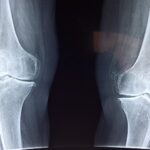
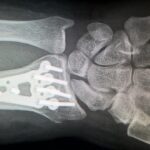
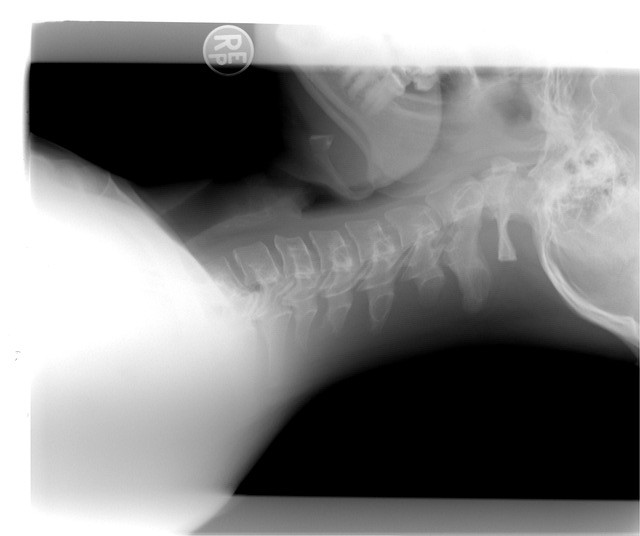
Diagnosis of the arthropathy component relies on a combination of clinical history, imaging, and supportive biochemical or genetic testing. Plain radiographs may demonstrate joint space narrowing, calcified cartilage or discs, osteophyte formation, and, in the spine, disc degeneration with calcification. Advanced imaging (such as MRI) may show cartilage damage and pigment deposition in connective tissues. Laboratory testing revealing elevated homogentisic acid in urine confirms the underlying metabolic disorder. Genetic testing may identify mutations in the relevant gene. A full assessment should include evaluation of other systemic complications (cardiac valves, kidneys, spine), given the systemic nature of the disease.
Treatment
Treatment focuses on symptom relief, maintaining joint function, slowing progression of arthropathy, and treating complications.
Conservative Management
This includes pain management (analgesics, non-steroidal anti-inflammatory drugs), physiotherapy for joint mobility and strengthening, activity modification to reduce joint load, weight management, and joint protection strategies. Regular monitoring of joint health and other systemic manifestations is also essential.
Surgical Management
In joints with advanced degeneration where conservative measures fail and function is significantly impaired, joint replacement (hip, knee) or other orthopaedic interventions may be indicated. Spinal surgery may be required in cases of severe spinal degeneration or complications. The timing of such surgery must consider the metabolic disease context and the patient’s overall health.
Prognosis and Complications
The arthropathy of alkaptonuria is progressive and may lead to significant joint disability, spinal stiffness, early joint replacement surgery, and impaired mobility. Additional complications include tendon ruptures, bone fragility, valvular heart disease, renal stones, and other systemic effects. Life expectancy may not be markedly reduced, but quality of life is often impacted by musculoskeletal and systemic complications. Early diagnosis and a multidisciplinary approach to management improve functional outcomes.
Prevention and Patient Education
While the metabolic defect cannot be reversed in most cases, patient education is vital. Patients should be informed about the nature of the disease, the importance of joint-protective activity, early recognition of joint symptoms, weight management, physiotherapy, and adherence to medical follow-up for systemic monitoring. Genetic counselling may be appropriate for families. Patients should be encouraged to engage in low-impact activity, avoid excessive joint load, and report new or worsening joint symptoms promptly.
References
Bernardini, G., Braconi, D., Zatkova, A., Sireau, N., Kujawa, M. J., Introne, W. J., … & Santucci, A. (2024). Alkaptonuria. Nature Reviews Disease Primers, 10(1), 16.
Kitahara, Y., Kaku, N., Tagomori, H., & Tsumura, H. (2021). Alkaptonuria with rapidly destructive arthropathy of the hip: A case report and literature review. Acta Orthopaedica et Traumatologica Turcica, 55(6), 563.
Anjali, K., Kumar, S., Bhargavi, M. V., Ramadurai, S., Mani, R., & Bhargavi, M. (2025). Musculoskeletal Manifestations of Alkaptonuria: A Case-Based Review of Literature. Cureus, 17(8).