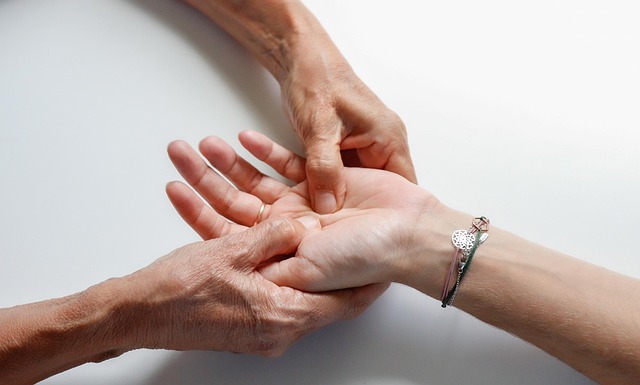
A volar wrist ganglion is a type of ganglion cyst that arises on the palm side (volar aspect) of the wrist, typically near the radial artery. Ganglion cysts are non-cancerous, fluid-filled lumps that develop along joints or tendons, and while they can appear anywhere, the wrist is one of the most common locations (1). These cysts contain a thick, jelly-like fluid and may fluctuate in size or even disappear spontaneously. Although ganglion cysts are benign and often asymptomatic, they can cause pain or interfere with joint movement, particularly when located on the volar wrist due to proximity to nerves and blood vessels (2).
Symptoms
The symptoms of a volar wrist ganglion can vary depending on its size, location, and whether it compresses nearby structures (1). Common symptoms include
- Visible Lump: A noticeable round or oval swelling on the volar (palm) side of the wrist, often near the base of the thumb.
- Pain or Discomfort: The cyst may be painful, especially when pressure is applied or during wrist movement.
- Tingling or Numbness: If the cyst compresses nearby nerves, particularly the median nerve, it may cause sensory disturbances such as tingling or numbness in the fingers.
- Reduced Range of Motion: Larger cysts or those situated near tendons or joint capsules may restrict wrist movement (3).
- Fluctuation in Size: The ganglion may change in size over time, growing larger with increased activity or decreasing when the wrist is at rest.
Causes
The exact cause of volar wrist ganglion cysts is not fully understood, but several theories exist
- Joint or Tendon Irritation: Chronic irritation or repeated stress on the wrist joint or tendons can lead to the formation of a cyst.
- Joint Capsule Defects: Tiny tears or defects in the joint capsule or tendon sheath may allow synovial fluid to leak and form a cyst.
- Degenerative Changes: In older adults, wear and tear or degenerative changes in the wrist joint may contribute to cyst formation.
- Trauma: Although less common, acute injuries to the wrist can potentially lead to ganglion development.
Despite these theories, many ganglion cysts form without a clearly identifiable cause (2).
Risk Factors
While ganglion cysts can occur in anyone, several factors increase the likelihood of developing a volar wrist ganglion (1).
- Age: Most common in individuals between 15 and 40 years old.
- Gender: Women are more frequently affected than men.
- Occupation or Activity: Repetitive wrist movements, such as those involved in typing, gymnastics, or factory work, may predispose individuals to cyst development.
- History of Joint Problems: People with osteoarthritis or joint instability may be at increased risk.
- Previous Injuries: A prior wrist injury can potentially lead to cyst formation due to joint capsule damage.
Diagnosis
Diagnosis of a volar wrist ganglion typically involves a clinical evaluation, including a thorough medical history and physical examination (3). The diagnostic process may include
- Physical Examination: The doctor will assess the cyst’s size, location, mobility, and whether it causes pain or impinges on nearby nerves.
- Transillumination: Shining a light through the cyst may reveal its fluid-filled nature, distinguishing it from solid masses.
- Imaging Tests
- Ultrasound: Useful to determine whether the lump is a cyst and to evaluate its relationship to surrounding structures.
- MRI (Magnetic Resonance Imaging): Provides detailed imaging to assess the cyst’s depth and its effect on nearby tissues, especially if surgery is being considered.
- Aspiration: Occasionally, the cyst may be aspirated (fluid drawn out with a needle) both for diagnostic and therapeutic purposes (3).
Treatment Options
Treatment for a volar wrist ganglion depends on the severity of symptoms and the patient’s preferences (3). Options include
- Observation
- If the cyst is painless and not interfering with function, a watch-and-wait approach may be recommended.
- Many ganglion cysts resolve spontaneously without intervention.
- Non-Surgical Management
- Immobilization: Wearing a wrist brace or splint can reduce activity-related stress and help shrink the cyst.
- Aspiration: Involves draining the fluid from the cyst using a needle. This procedure is quick but may not prevent recurrence, especially for volar cysts which are close to the radial artery (2).
- Steroid Injection: Sometimes used after aspiration to reduce inflammation, though effectiveness varies.
- Surgical Excision
- Indicated if the cyst is painful, recurrent, or compresses nerves or vessels.
- The procedure involves removing the cyst and a portion of the involved joint capsule or tendon sheath.
- Due to the cyst’s proximity to the radial artery and nerves, surgical excision should be performed by an experienced hand surgeon.
- Recurrence after surgery is less common than with aspiration, but still possible (1).
Living With or Prevention
Living with a volar wrist ganglion can be manageable for many individuals, especially when symptoms are mild (1). Here are some considerations
- Activity Modification: Avoiding or minimizing repetitive wrist activities can help reduce symptom severity.
- Wrist Support: Using wrist braces during activities may prevent worsening of the cyst.
- Monitoring: Regularly monitoring the cyst for changes in size, pain, or function is important.
- Hand Therapy: A physical or occupational therapist may provide exercises to maintain wrist mobility and strength, especially post-treatment.
Prevention
There are no guaranteed methods to prevent volar wrist ganglion cysts. However, taking care of wrist joints by avoiding repetitive strain, using ergonomic tools, and treating wrist injuries promptly may lower the risk (3).
References
- Zhou J, Al-Ani S, Jester A, Oestreich K, Baldrighi C, Ting JWC. Wrist Ganglion Cysts in Children: An Update and Review of the Literature. Hand (N Y). 2022 Nov;17(6):1024-1030. doi: 10.1177/1558944720966716. Epub 2020 Nov 11. PMID: 33174451; PMCID: PMC9608283.
- Konigsberg MW, Tedesco LJ, Mueller JD, Ball JR, Wu CH, Kadiyala RK, Strauch RJ, Rosenwasser MP. Recurrence Rates of Dorsal Wrist Ganglion Cysts After Arthroscopic Versus Open Surgical Excision: A Retrospective Comparison. Hand (N Y). 2023 Jan;18(1):133-138. doi: 10.1177/15589447211003184. Epub 2021 Apr 1. PMID: 33789496; PMCID: PMC9806526.
- Lui TH. Endoscopic Ganglionectomy of the Volar Radial Wrist Ganglion. Arthrosc Tech. 2017 Sep 4;6(5):e1477-e1480. doi: 10.1016/j.eats.2017.06.001. PMID: 29354461; PMCID: PMC5709611.