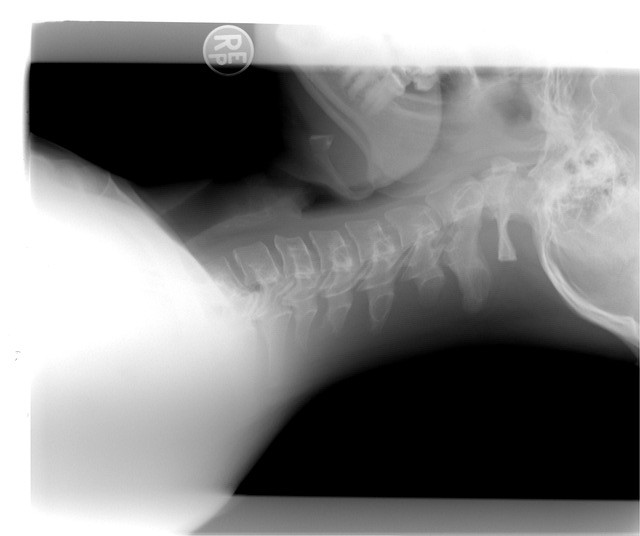
A Unicameral Bone Cyst (UBC), also known as a simple bone cyst, is a benign (non-cancerous), fluid-filled cavity that typically forms within the bone. It most commonly occurs in children and adolescents, especially during their growth years, and is usually discovered incidentally during imaging for unrelated issues or after a bone fracture (1). While UBCs are not cancerous and do not spread to other parts of the body, they can weaken the bone and increase the risk of pathological fractures. These cysts typically form in long bones, such as the humerus (upper arm) and femur (thigh bone), and often resolve spontaneously with skeletal maturity. However, some cases require medical intervention, especially if the cyst leads to bone fractures or shows signs of expansion (1).
Symptoms
Unicameral bone cysts are often asymptomatic, especially in the early stages. Many are discovered accidentally on X-rays taken for other reasons. When symptoms do occur, they usually stem from a complication such as a fracture (1). Common symptoms include
- Localized pain: This may be intermittent or continuous, especially after minor trauma.
- Swelling or tenderness: The affected area may become tender to the touch or show visible swelling.
- Decreased range of motion: Especially when the cyst is near a joint, it may affect movement.
- Fractures: Pathologic fractures—breaks that occur in weakened bones due to the cyst—are often the first clinical signs.
- Limping or difficulty bearing weight: Seen particularly in cysts affecting the lower limbs.
Since many of these signs overlap with other bone conditions, accurate diagnosis through imaging is crucial (2).
Causes
The exact cause of unicameral bone cysts remains unclear, though several theories have been proposed. One widely accepted hypothesis is the venous obstruction theory, which suggests that impaired drainage of interstitial fluid from the bone leads to cyst formation (2). Other possible contributing factors include
- Developmental abnormalities: Issues during bone growth and development may lead to cyst formation.
- Trauma: Some researchers believe that minor, unnoticed trauma to the bone may trigger cyst formation.
- Genetic or cellular factors: Abnormalities at the cellular level, such as irregularities in osteoclastic or osteoblastic activity, may play a role.
Despite these theories, no single cause has been definitively established (3).
Risk Factors
Certain factors increase the likelihood of developing a unicameral bone cyst:
- Age: UBCs are most common between the ages of 5 and 15 (2).
- Sex: Boys are affected approximately twice as often as girls.
- Growth phase: Children experiencing rapid bone growth are more susceptible.
- Bone location: Cysts are most frequently found in the proximal humerus and femur.
- Genetic predisposition: Though rare, some familial patterns have been observed (1).
While UBCs are generally benign, those with the above risk factors should be monitored more closely, especially following injuries.
Diagnosis
Diagnosing a unicameral bone cyst often begins with imaging studies, as the condition is commonly found incidentally (3). Diagnostic approaches include
- X-rays: The primary method of diagnosis. UBCs typically appear as well-defined, lytic (radiolucent) lesions in the metaphysis of long bones, often expanding toward the bone shaft.
- MRI (Magnetic Resonance Imaging): Offers a detailed view of the cyst’s internal structure and helps distinguish UBCs from other cystic or tumorous bone lesions.
- CT scan (Computed Tomography): Occasionally used for surgical planning or to evaluate complex lesions.
- Bone scan: Rarely needed but may help assess metabolic activity in the cyst.
- Biopsy: If imaging is inconclusive or malignancy is suspected, a biopsy may be performed to confirm the diagnosis (3).
Proper differentiation from other bone lesions such as aneurysmal bone cysts, fibrous dysplasia, or even malignant tumors is essential.
Treatment Options
Management of unicameral bone cysts depends on the size, location, symptoms, and risk of fracture (2). Treatment options range from observation to surgical intervention
- Observation
-
- In asymptomatic patients or small cysts not at risk of fracture, periodic monitoring with X-rays is often sufficient.
- Many cysts heal spontaneously, especially after skeletal maturity.
- Steroid Injections
- Intralesional steroid injections (usually with methylprednisolone) can help reduce cyst activity and promote healing.
- This method is minimally invasive and may require multiple sessions.
- Bone Marrow or Bone Graft Injections
- Injection of autologous bone marrow or synthetic bone grafts can stimulate bone healing.
- This is often combined with aspiration of the cyst fluid.
- Surgical Curettage and Bone Grafting
- Involves scraping out the cyst (curettage) and filling the cavity with bone graft material.
- Often used for large or recurrent cysts.
- Internal Fixation
- In cases involving fractures or risk of fracture, internal fixation with rods or plates may be necessary.
- This is often combined with curettage and grafting.
The choice of treatment depends on the individual case and is typically decided by an orthopedic specialist (1).
Living With or Prevention
Living with a unicameral bone cyst generally does not significantly impact long-term health. However, it requires careful monitoring, especially in growing children or in cases involving large cysts (2). Parents and caregivers should ensure that children
- Avoid high-impact sports or activities if advised by the physician.
- Attend regular follow-up appointments for imaging and clinical assessment.
- Report any new pain or trauma immediately.
With proper management, most children with UBCs go on to lead normal, active lives.
There are currently no definitive measures to prevent unicameral bone cysts, as their cause is still not fully understood. However, early detection and intervention can prevent complications such as fractures (3). General bone health practices, such as adequate calcium and vitamin D intake, regular physical activity, and injury prevention strategies, may support overall skeletal integrity.
References
- Pretell-Mazzini, J., Murphy, R. F., Kushare, I., & Dormans, J. P. (2014). Unicameral bone cysts: general characteristics and management controversies. JAAOS-Journal of the American Academy of Orthopaedic Surgeons, 22(5), 295-303.
- Noordin, S., Allana, S., Umer, M., Jamil, M., Hilal, K., & Uddin, N. (2018). Unicameral bone cysts: Current concepts. Annals of medicine and surgery, 34, 43-49.
- Wilkins, R. M. (2000). Unicameral bone cysts. JAAOS-Journal of the American Academy of Orthopaedic Surgeons, 8(4), 217-224.